
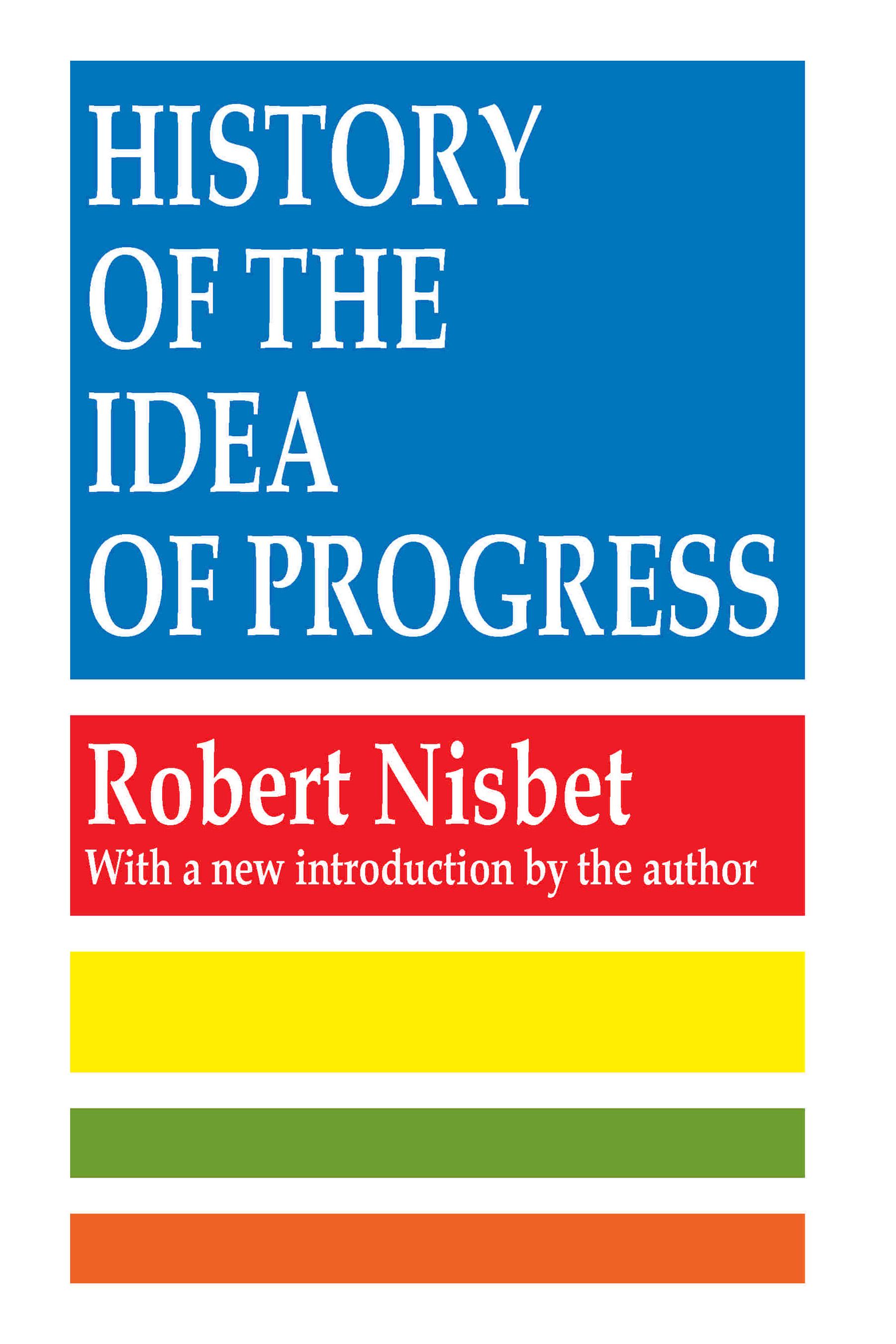
The idea of progress from the Enlightenment to postmodernism is still very much with us. In intellectual discourse, journals, popular magazines, and radio and talk shows, the debate between those who are "progressivists" and those who are "declinists" is as spirited as it was in the late seventeenth century. In History of the Idea of Progress, Robert Nisbet traces the idea of progress from its origins in Greek, Roman, and medieval civilizations to modern times. It is a masterful frame of reference for understanding the present world.
Nisbet asserts there are two fundamental building blocks necessary to Western doctrines of human advancement: the idea of growth, and the idea of necessity. He sees Christianity as a key element in both secular and spiritual evolution, for it conveys all the ingredients of the modern idea of progress: the advancement of the human race in time, a single time frame for all the peoples and epochs of the past and present, the conception of time as linear, and the envisagement of the future as having a Utopian end.
In his new introduction, Nisbet shows why the idea of progress remains of critical importance to studies of social evolution and natural history. He provides a contemporary basis for many disciplines, including sociology, economics, philosophy, religion, politics, and science. History of the Idea of Progress continues to be a major resource for scholars in all these areas.
Pay easily by card, Klarna, Apple Pay or Google Pay. Not happy? You always have a 14-day money-back guarantee. Read more in our terms. If you have any questions, email us at hello@memmo.org.
Memmo makes studying easier – wherever you are in the world. We bring your course books and smart study tools together in one place: summaries, quizzes, podcasts and flashcards. Plus Ted, your study buddy who answers anything you wonder. Over 50,000 students already study here – built to help you learn faster and stress less.