
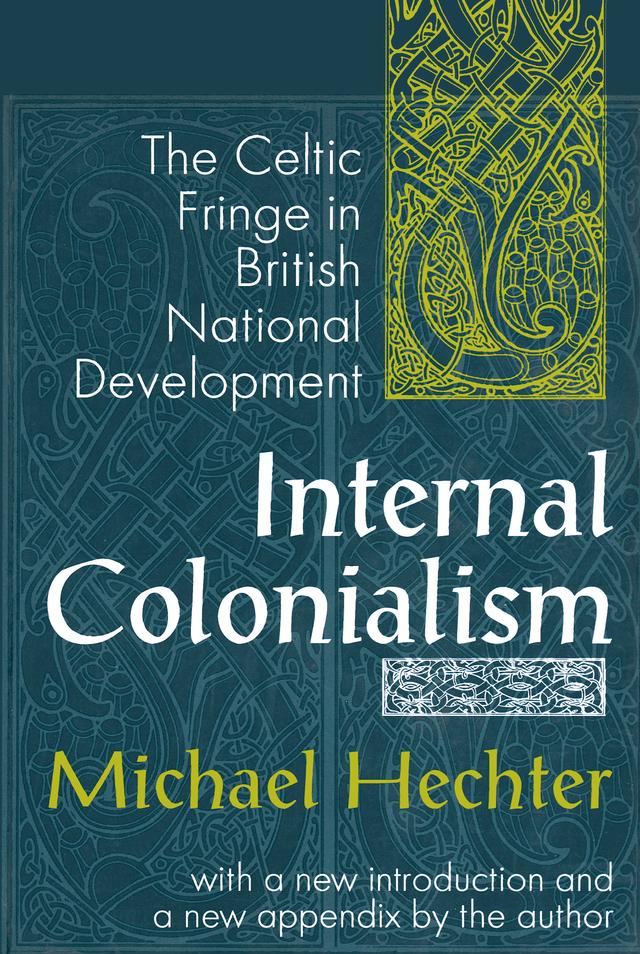
Recent years have seen a resurgence of separatist sentiments among national minorities in many industrial societies, including the United Kingdom. In 1997, the Scottish and Welsh both set up their own parliamentary bodies, while the tragic events in Northern Ireland continued to be a reminder of the Irish problem. These phenomena call into question widely accepted social theories which assume that ethnic attachments in a society will wane as industrialization proceeds. This book presents the social basis of ethnic identity, and examines changes in the strength of ethnic solidarity in the United Kingdom during the 19th and 20th centuries. As well as being a case study, the work also has implications, as it suggests that the internal colonialism of the kind experienced in the British Isles has its analogues in the histories of other industrial societies. Hechter examines the unexpected persistence of ethnicity in the politics of industrial societies by focusing on the British Isles. Why do many of the inhabitants of Wales, Scotland and Ireland continue to maintain an ethnic identity opposed to England? Hechter explains the salience of ethnic identity by analyzing the relationships between England, the national core, and its periphery, the Celtic fringe, in the context of two alternative models of core-periphery relations in the industrial setting. The "diffusion" model suggests that intergroup contact leads to ethnic homogenization, and the "internal colonial" model, suggests such contact heightens distinctive ethnic identification. His findings lend support to the internal colonial model, and show that, although industrialization did contribute to a decline in interregional linguistic differences, it resulted neither in the cultural assimilation of Celtic lands, nor the development of regional economic equality. The study concludes that ethnic solidarity will inevitably emerge among groups which are relegated to inferior positions in a cultural division of labour.
Pay easily by card, Klarna, Apple Pay or Google Pay. Not happy? You always have a 14-day money-back guarantee. Read more in our terms. If you have any questions, email us at hello@memmo.org.
Memmo makes studying easier – wherever you are in the world. We bring your course books and smart study tools together in one place: summaries, quizzes, podcasts and flashcards. Plus Ted, your study buddy who answers anything you wonder. Over 50,000 students already study here – built to help you learn faster and stress less.
You might also like
Buy the book0