
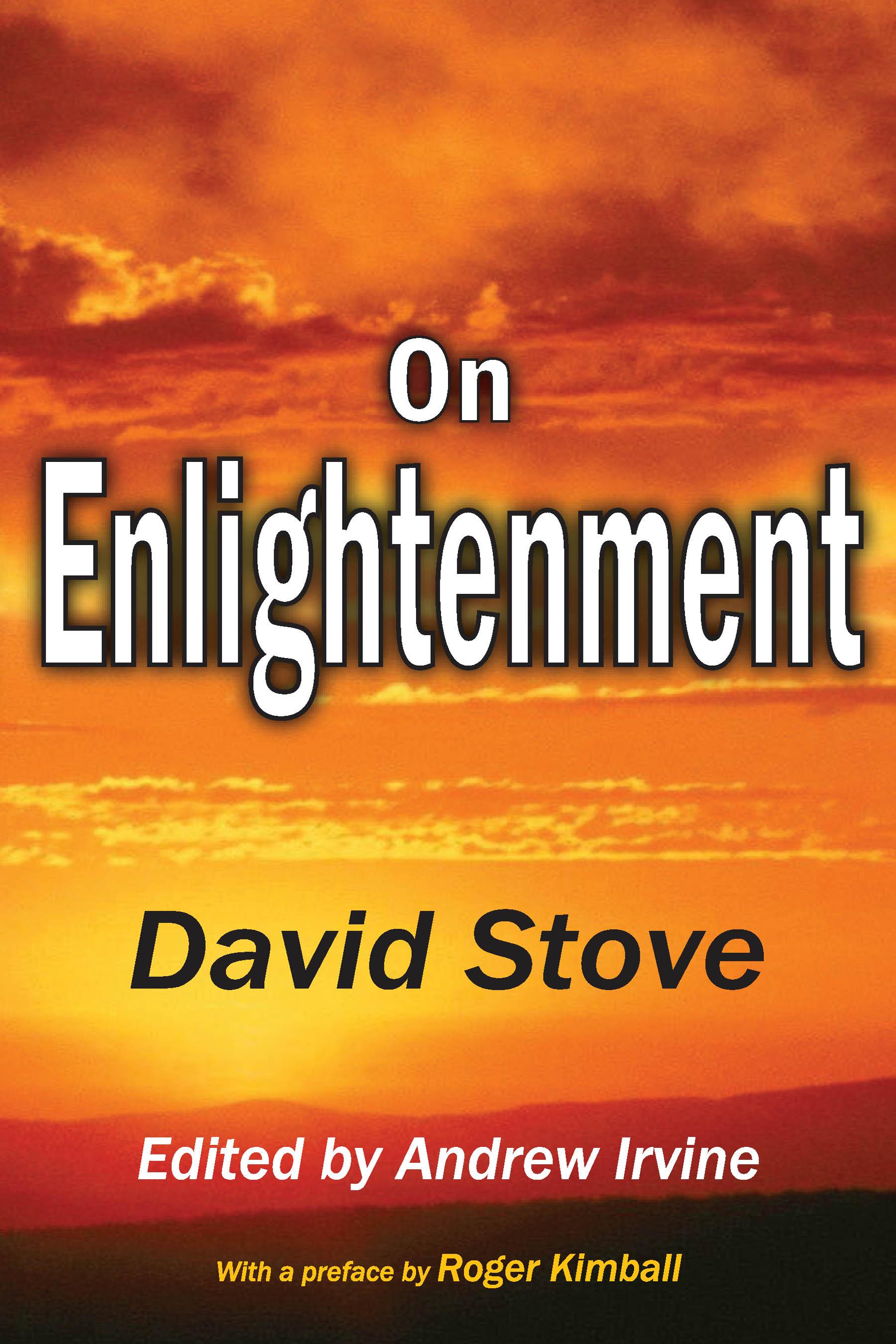
The idea of enlightenment entails liberty, equality, rationalism, secularism, and the connection between knowledge and well being. In spite of the setbacks of revolutionary violence, mass murder, and two world wars, the spread of enlightenment values is still the yardstick by which moral, political, and scientific advances are measured. In On Enlightenment, David Stove attacks the roots of enlightenment thought to define its successes, limitations, and areas of likely failures.
Stove champions the use of reason and recognizes the falsity of religious claims as well as the importance of individual liberty. He rejects the enlightenment's uncritical optimism regarding social progress and its willingness to embrace revolutionary change. What evidence is there that the elimination of superstition will lead to happiness? Or that it is possible to accept Darwinism without Social Darwinism? Or that the enlightenment's liberal, rationalistic outlook will lead to the social progress envisioned by its advocates?
Despite best intentions, says Stove, social reformers who attempt to improve the world inevitably make things worse. He advocates a conservative approach to change, pointing out that social structures are so large and complex that any widespread social reform will have innumerable unforeseen consequences. Writing in the tradition of Edmund Burke with the same passion for clarity and intellectual honesty as George Orwell, David Stove was one of the most articulate and insightful philosophers of his day.
Pay easily by card, Klarna, Apple Pay or Google Pay. Not happy? You always have a 14-day money-back guarantee. Read more in our terms. If you have any questions, email us at hello@memmo.org.
Memmo makes studying easier – wherever you are in the world. We bring your course books and smart study tools together in one place: summaries, quizzes, podcasts and flashcards. Plus Ted, your study buddy who answers anything you wonder. Over 50,000 students already study here – built to help you learn faster and stress less.