
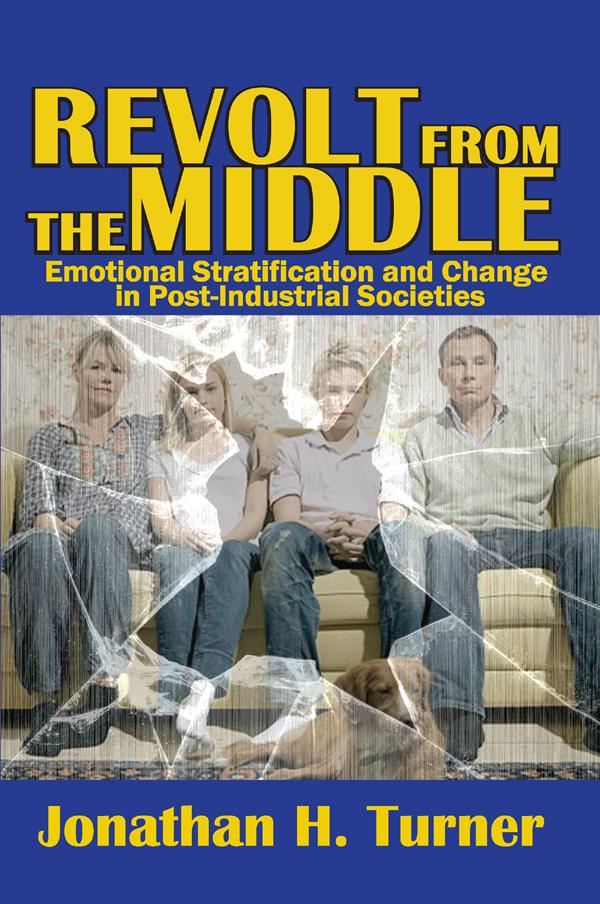
Those who address conflict resulting from differing socio-economic groups (stratification systems) focus on the arousal of negative emotions. Less frequently explored are the effects of positive emotions, particularly among the middle classes in industrial and post-industrial societies. In more developed societies, those experiencing positive emotional energy far outnumber those who endure negative emotions. Jonathan H. Turner sees the distribution of positive and negative emotions in developed societies as another basis for grouping people into socio-economic classifications. Such distribution explains the commitments of middle classes to the system and the lack of class-based social movements from lower classes. Turner argues for Marx's theory-when a population's vast majority is consistently experiencing negative emotions, the potential for revolution within society increases. Turner explains why class-conflict potential is low in developed societies and how it might increase if the middle classes lose their share of resources. He notes the beginnings of this shift, but says that the overall positive emotions of the middle class have not yet transitioned from positive to negative. Capitalism will persist, but it will be a reformed capitalism, especially in the United States, as taxes and regulation by government assure higher levels of resource redistribution to members of a society.
Pay easily by card, Klarna, Apple Pay or Google Pay. Not happy? You always have a 14-day money-back guarantee. Read more in our terms. If you have any questions, email us at hello@memmo.org.
Memmo makes studying easier – wherever you are in the world. We bring your course books and smart study tools together in one place: summaries, quizzes, podcasts and flashcards. Plus Ted, your study buddy who answers anything you wonder. Over 50,000 students already study here – built to help you learn faster and stress less.
You might also like
Buy the book0