
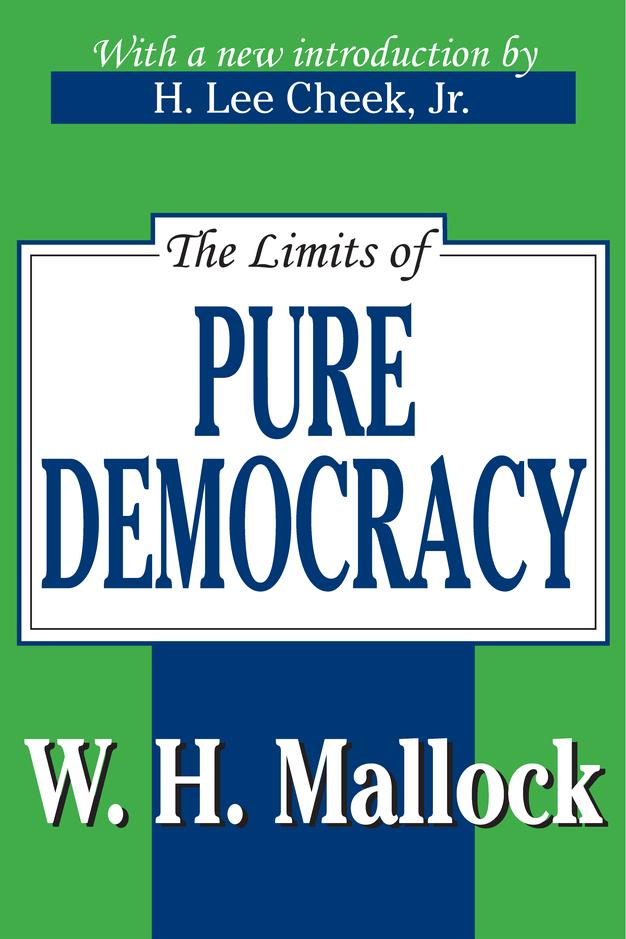
The 1910s was a decade in which theories of socialism, pacifism, and collectivism flowered. Publicists and playwrights from Sidney Webb to George Bernard Shaw expressed not just belief in "utopianism" but a vigorous assault on the existing political and economic order. Less well known is how a group of Tory thinkers laid the foundations of a conservative counter-attack expressed with equal literary and intellectual brilliance. Foremost among them was W. H. Mallock.
In The Limits of Pure Democracy he argued that the pseudo-populist leaders of the political party system promise everything but deliver only the end of parties as such. For Mallock, what starts with populism ends in dictatorship. The Russian Revolution was simply the historical outcome of utopian socialist visions that were more dedicated to destroying the present system of things than bringing about a revitalized future. Mallock's book explains how the modern free market succeeds through competition in increasing output, broadening occupational opportunities, and multiplying the numbers of skilled professionals. In contrast, welfare schemes serve to deepen poverty by spreading wealth so evenly that incentives to work decline and personal savings are eliminated. These arguments have become commonplace today. But at the time they served as an incendiary reminder that class warfare works in both directions.
Mallock was a remarkably talented writer who made the case against exaggerated expectations, a nascent welfare system, and mass political parties led by oligarchs. But he also offered a case for increasing a regard for work, advancing the cause of education as a method of entering the modern world, and for retaining a sense of religious codes that define the West. Mallock's search for an understanding of popular rule coincided with his appreciation and elucidation of the limitations of the emerging plebiscitarian spirit within democracy. The Limits of Pure Democracy will
Pay easily by card, Klarna, Apple Pay or Google Pay. Not happy? You always have a 14-day money-back guarantee. Read more in our terms. If you have any questions, email us at hello@memmo.org.
Memmo makes studying easier – wherever you are in the world. We bring your course books and smart study tools together in one place: summaries, quizzes, podcasts and flashcards. Plus Ted, your study buddy who answers anything you wonder. Over 50,000 students already study here – built to help you learn faster and stress less.