
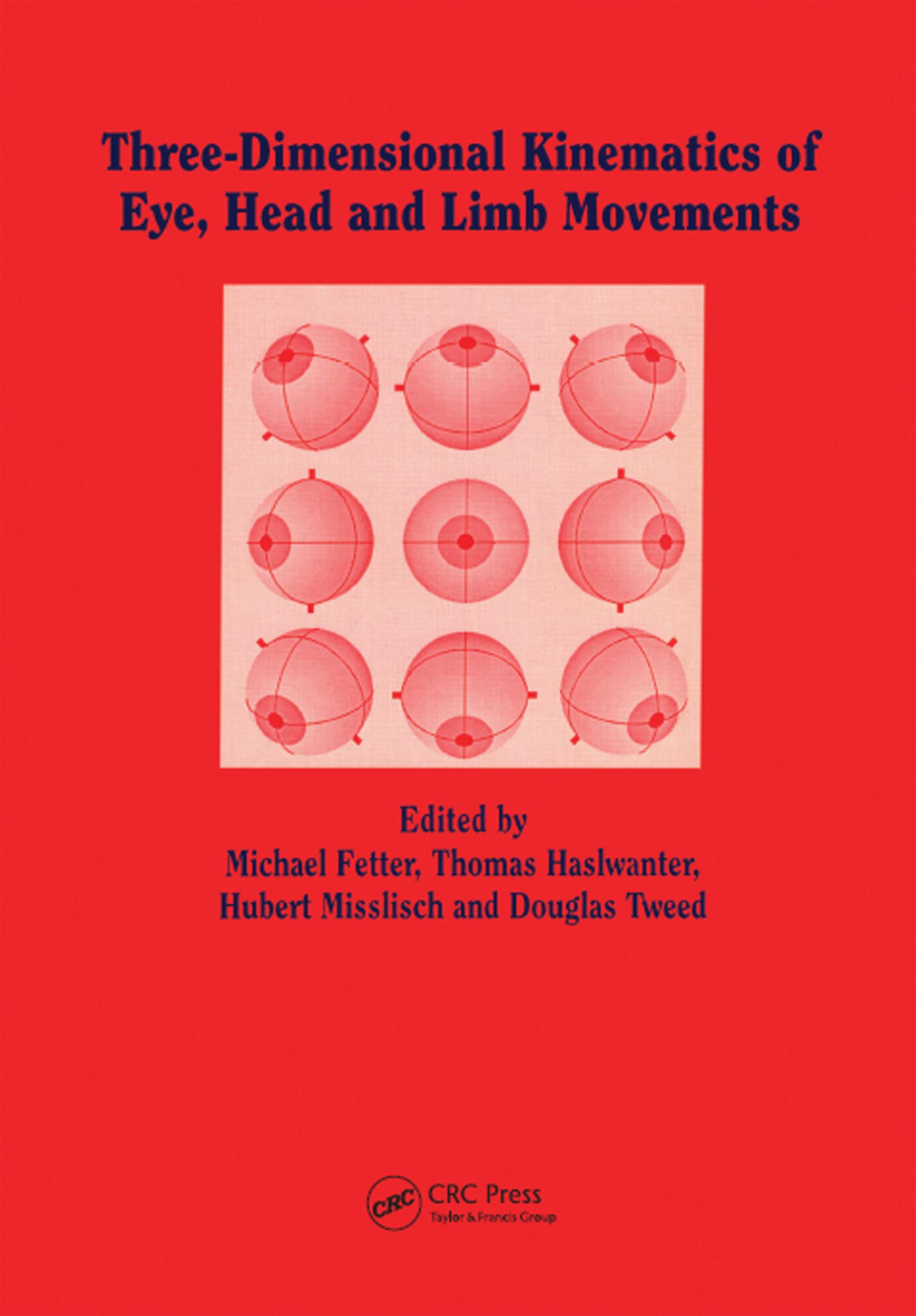
The 19th-century pioneers of motor physiology — Helmholtz, Hering, Fick and others — used the mathematics of motion, known as kinematics, to describe the laws of human movement and to deduce the neural control principles underlying these laws. After long neglect — partly due to limitations in stimulation and recording techniques — the kinematic approach is now resurging, fortified with modern computers and electrophysiology. New developments in recording techniques, as well as an improved understanding of the complex control properties of three-dimensional movements, have led to a flood of new research in this area. The classical laws of Donders and Listing have been confirmed and generalized, and computer simulations of the neural control of three-dimensional movement have been developed and tested. In this book, some of the world's leading scientists of motor control discuss how the brain represents and transforms the kinematic variables of movement. Background chapters explain the basic concepts — non-commutativity, redundancy and the classical laws — and their application to normal function and motor disorders, and shorter articles describe current research. The contributions are based on presentations at a symposium held in Tubingen in August 1995. The wide scope of the book should enable researchers to gain an overview of current research, but should also help newcomers to the field to get a good understanding of the questions and problems involved in three-dimensional movement control.
Pay easily by card, Klarna, Apple Pay or Google Pay. Not happy? You always have a 14-day money-back guarantee. Read more in our terms. If you have any questions, email us at hello@memmo.org.
Memmo makes studying easier – wherever you are in the world. We bring your course books and smart study tools together in one place: summaries, quizzes, podcasts and flashcards. Plus Ted, your study buddy who answers anything you wonder. Over 50,000 students already study here – built to help you learn faster and stress less.