
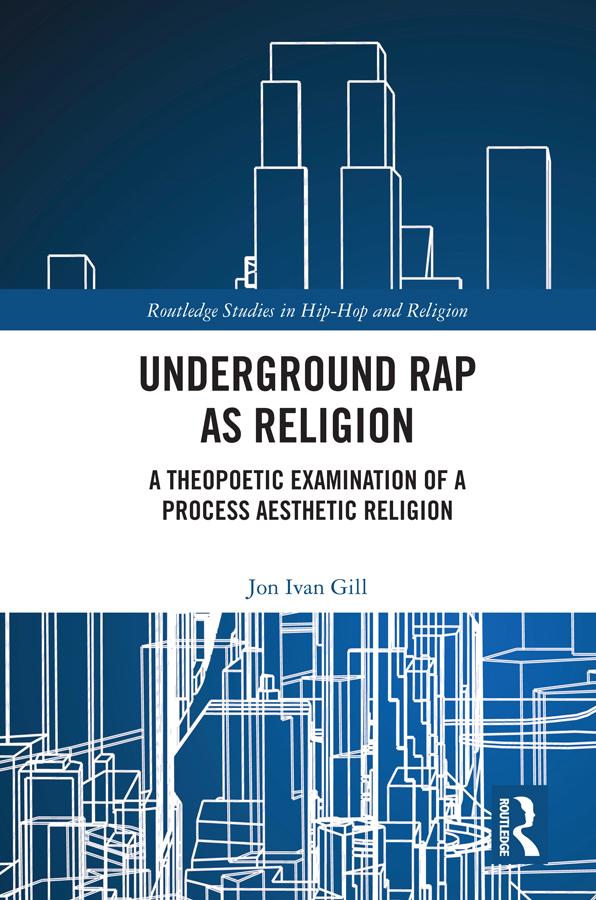
Underground rap is largely a subversive, grassroots, and revolutionary movement in underground hip-hop, tending to privilege creative freedom as well as progressive and liberating thoughts and actions. This book contends that many practitioners of underground rap have absorbed religious traditions and ideas, and implement, critique, or abandon
them in their writings. This in turn creates processural mutations of God that coincide with and speak to the particular context from which they originate.
Utilising the work of scholars like Monica Miller and Alfred North Whitehead, Gill uses a secular religious methodology to put forward an aesthetic philosophy of religion for the rap portion of underground hip-hop. Drawing from Whiteheadian process thought, a theopoetic
argument is made. Namely, that it is not simply the case that is God the "poet of the world", but rather rap can, in fact, be the poet (creator) of its own form of quasi-religion.
This is a unique look at the religious workings and implications of underground rap and hip hop. As such, it will be of keen interest to scholars of Religious Studies, Hip-Hop Studies and Process Philosophy and Theology.
Pay easily by card, Klarna, Apple Pay or Google Pay. Not happy? You always have a 14-day money-back guarantee. Read more in our terms. If you have any questions, email us at hello@memmo.org.
Memmo makes studying easier – wherever you are in the world. We bring your course books and smart study tools together in one place: summaries, quizzes, podcasts and flashcards. Plus Ted, your study buddy who answers anything you wonder. Over 50,000 students already study here – built to help you learn faster and stress less.