
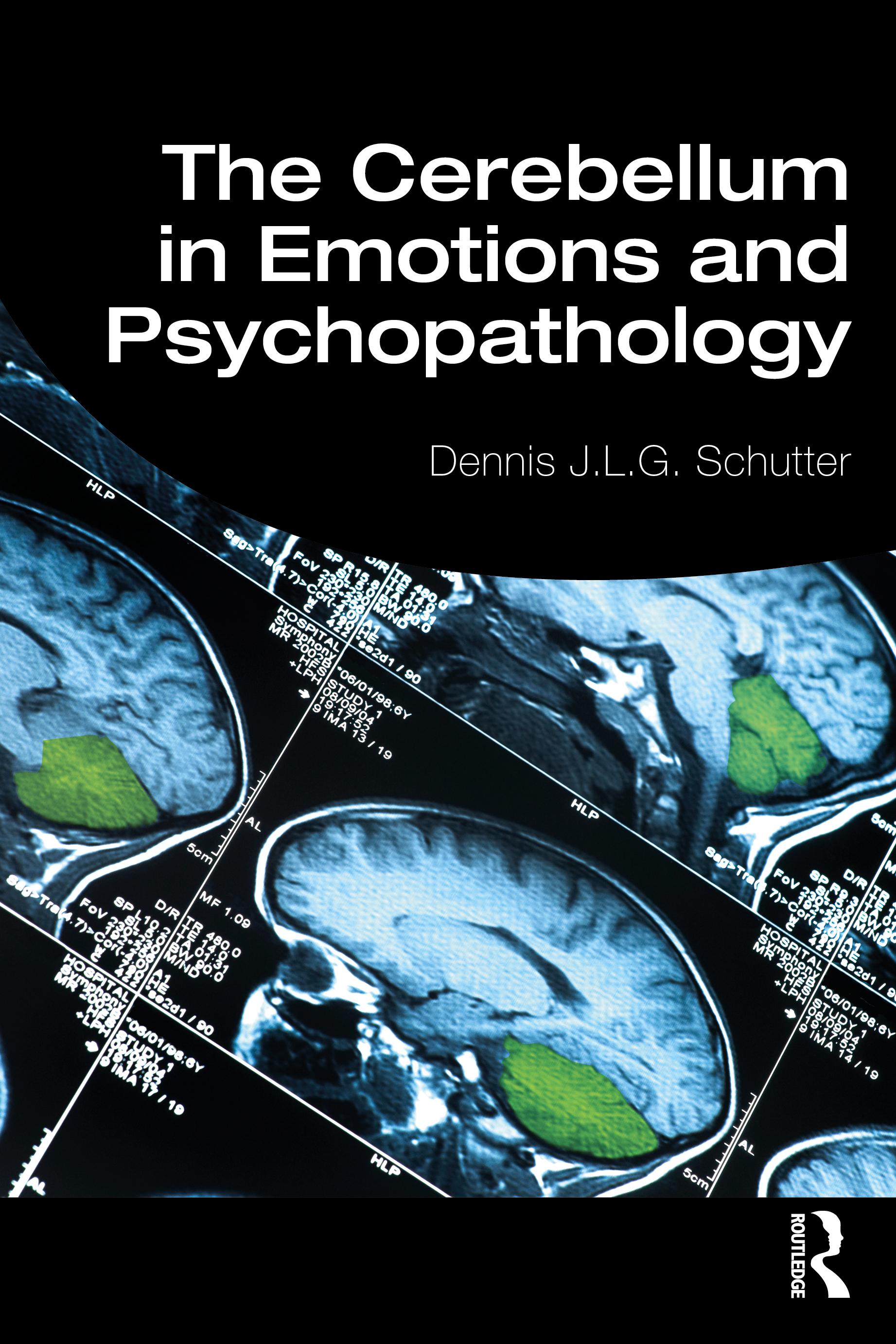
This groundbreaking volume examines the complex role of the cerebellum in emotional regulation and disorders that are insufficiently understood, subverting the widely held belief that the cerebellum is solely involved in balance and motor functions.
Beginning with the evolution of the cerebellum toward a structure dedicated to homeostatic regulation and socio-emotional behavior, the book examines the growing body of evidence supporting the importance of the cerebellum in emotions, cognition, and psychopathology. Going on to discuss the implications of cerebellar abnormalities, Schutter analyzes groundbreaking research and explores how cerebellar abnormalities are associated with disruption in associative learning in anxiety, the pathophysiology of depression and cognitive regulation, the synchronization of information processing in schizophrenia, the aberrant connectivity patterns in autism spectrum disorders, and explosive forms of aggressive behavior.
Collating pioneering research on the multifaceted role of the cerebellum, this book will be essential reading for students and researchers of neurology and psychopathology.
Pay easily by card, Klarna, Apple Pay or Google Pay. Not happy? You always have a 14-day money-back guarantee. Read more in our terms. If you have any questions, email us at hello@memmo.org.
Memmo makes studying easier – wherever you are in the world. We bring your course books and smart study tools together in one place: summaries, quizzes, podcasts and flashcards. Plus Ted, your study buddy who answers anything you wonder. Over 50,000 students already study here – built to help you learn faster and stress less.