
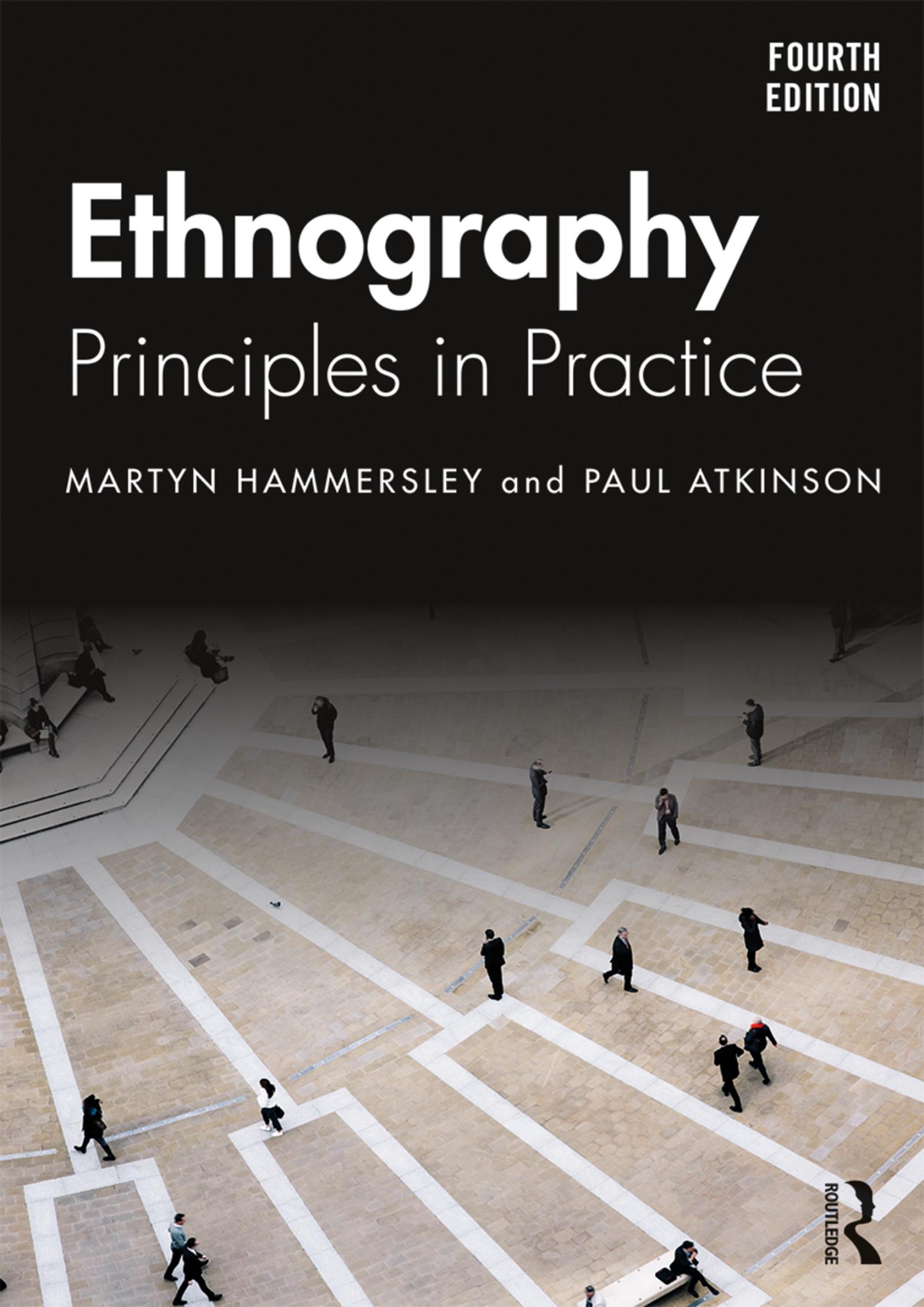
Now in its fourth edition, this leading introduction to ethnography has been thoroughly updated and substantially rewritten. The volume offers a systematic introduction to ethnographic principles and practice, and includes a new chapter on ‘Ethnography in the digital world’.
The authors argue that ethnography is best understood as a reflexive process. This requires recognition that social research is part of the world that it studies, and demands that researchers reflect on how they shape both data and analysis. Starting in Chapter 1 with an outline of the principle of reflexivity, against the background of competing research philosophies, the authors go on to discuss the main features of ethnographic work, including:
- the selection and sampling of cases
- the problem of access
- field relations and observation
- interviewing
- the use of documents
- recording and organizing data
-
the process of data analysis and writing research reports.
There is also consideration of the ethical issues involved in ethnographic research. Throughout, the discussion draws on a wide range of illustrative material from classic and more recent studies, within a global context. The new edition of this popular textbook will be an indispensable resource for undergraduate and postgraduate students, and for all researchers using ethnographic methods in the social sciences and the humanities.
Pay easily by card, Klarna, Apple Pay or Google Pay. Not happy? You always have a 14-day money-back guarantee. Read more in our terms. If you have any questions, email us at hello@memmo.org.
Memmo makes studying easier – wherever you are in the world. We bring your course books and smart study tools together in one place: summaries, quizzes, podcasts and flashcards. Plus Ted, your study buddy who answers anything you wonder. Over 50,000 students already study here – built to help you learn faster and stress less.