
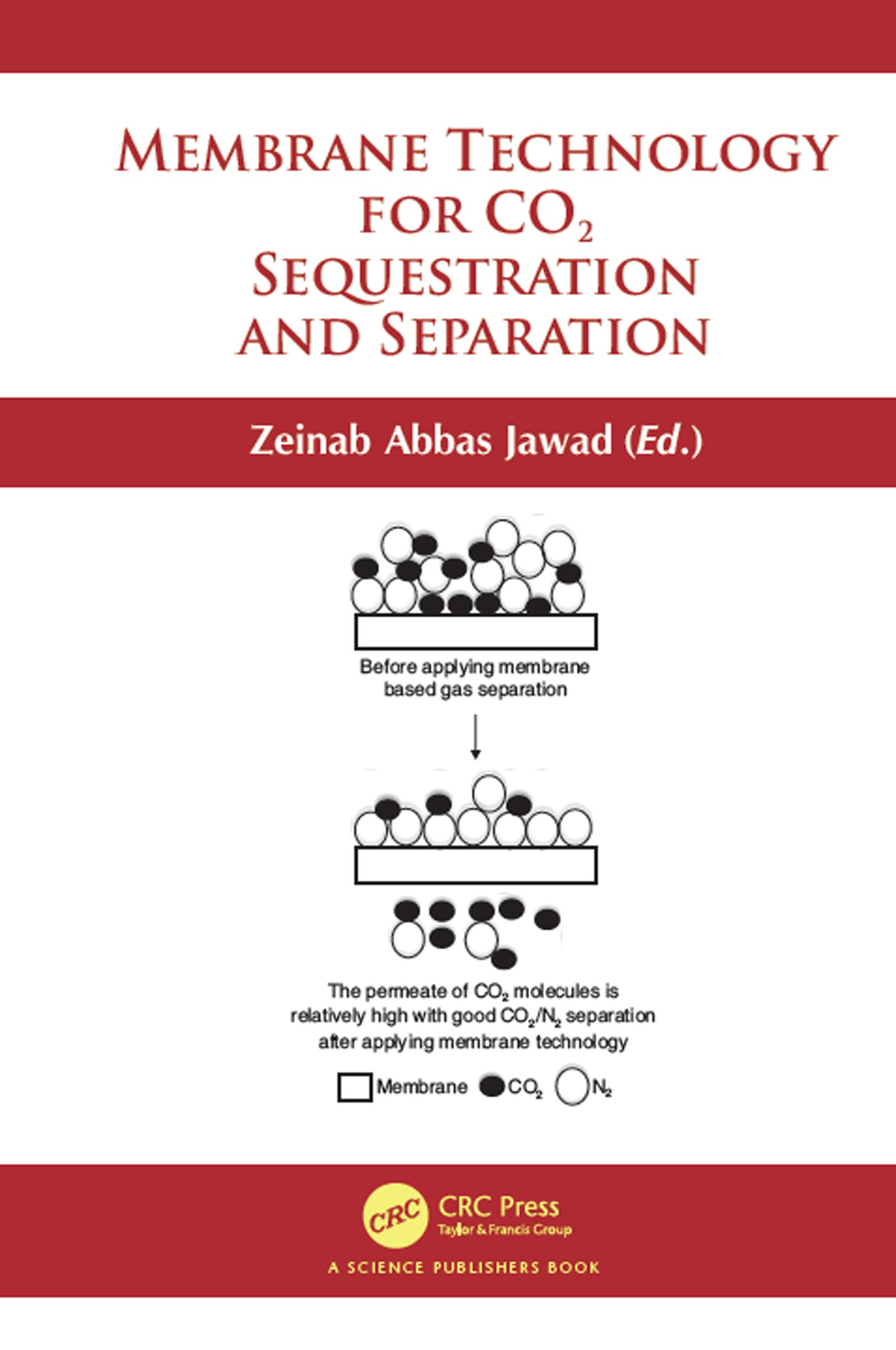
This book addresses the fundamentals of CO2 storage for long-term sequestration in a subsurface geologic formation. In general, membrane gas separation can find a large room of application in flue gas. To achieve the development of this technology on a larger scale than which is possible in the lab we have to use membrane engineering. Consequently, greater emphasis is placed on novel materials for gas separation. Possible design strategies and role of novel materials are discussed. Additionally, the latest progress in design and preparation of asymmetric membranes for natural gas purification are highlighted. In fact, further development should focus on module and process design in order to bring gas separation membrane technology into commercial application. Therefore, the keys issues to propel current research towards industrial application are examined. Besides, the feasibility of implementing polyimide membrane for CO2 removal under real industrial conditions and its economic viability are highlighted. In order to exhibit excellent film-forming properties, zeolite membrane and cellulose acetate butyrate membrane areaddressed. Interestingly, it was found that the most accurate theoretical three-phase model is arguably revised Pal model with average percentage error of 0.74%.
Pay easily by card, Klarna, Apple Pay or Google Pay. Not happy? You always have a 14-day money-back guarantee. Read more in our terms. If you have any questions, email us at hello@memmo.org.
Memmo makes studying easier – wherever you are in the world. We bring your course books and smart study tools together in one place: summaries, quizzes, podcasts and flashcards. Plus Ted, your study buddy who answers anything you wonder. Over 50,000 students already study here – built to help you learn faster and stress less.