
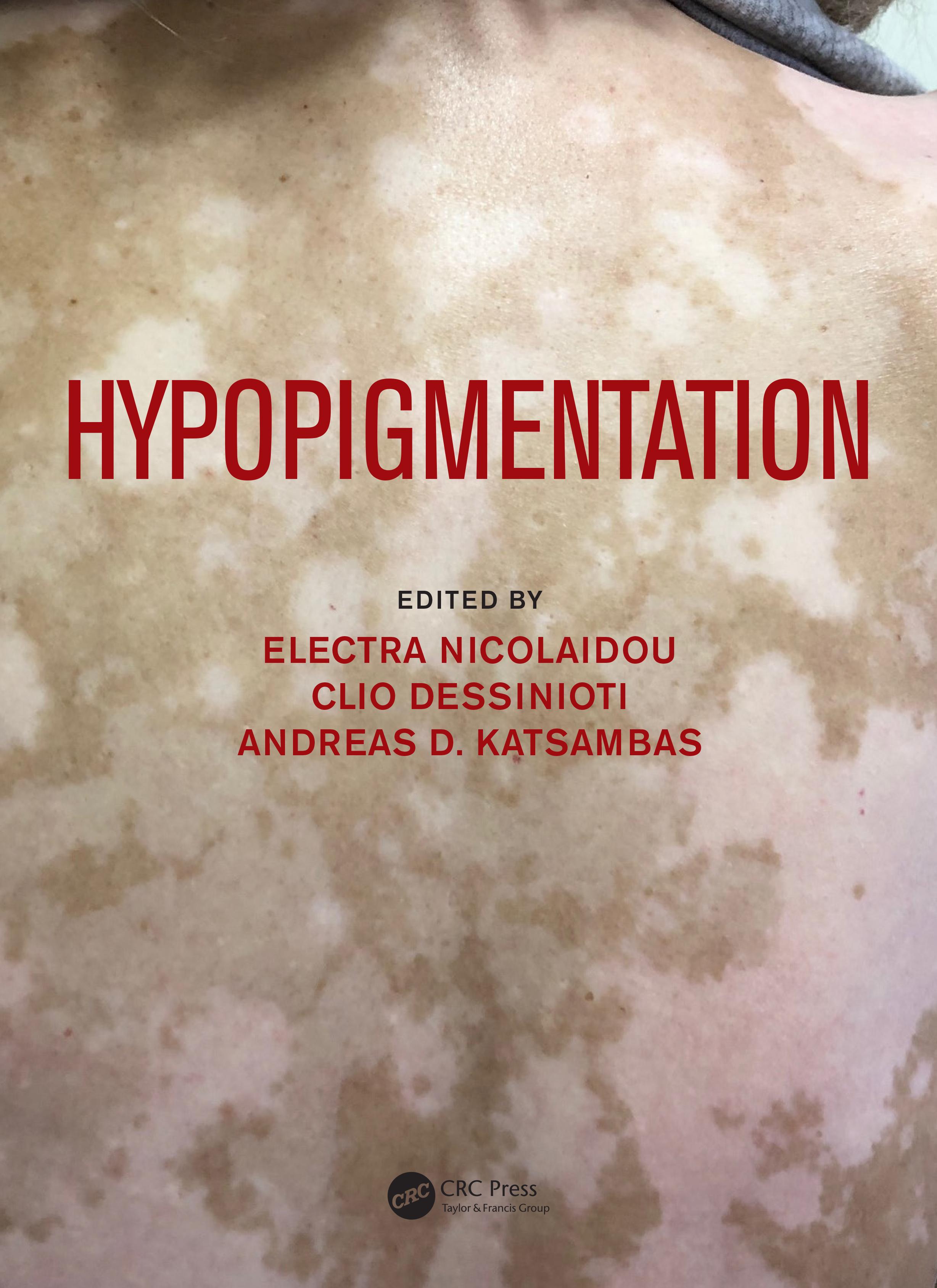
There are many disorders of a lack of pigmentation in the skin, with different causations
and effects, of which vitiligo is only the best known; this comprehensive text from international
experts will enable clinicians to diagnose the full range of these conditions and suggest
the most effective management options for their patients.
Contents: Basic concepts of melanocyte biology * Approach to hypopigmentation *
Historical review of vitiligo * Epidemiology and classification of vitiligo * Pathophysiology
of vitiligo * Segmental vitiligo * Childhood versus post-childhood vitiligo * Pharmacological
therapy of vitiligo * Surgical treatment of vitiligo * Phototherapy and lasers in the treatment
of vitiligo * Emerging treatments for vitiligo * Tuberous sclerosis complex * Oculocutaneous
albinism * Hermansky-Pudlak syndrome, Chediak-Chigasi syndrome, and Griscelli
syndrome * Piebaldism * Waardenburg syndrome * Alezzandrini syndrome, Margolis
syndrome, Cross syndrome, and other rare genetic disorders * Mosaic hypopigmentation
* Skin disorders causing post-inflammatory hypopigmentation * Infectious and parasitic
causes of hypopigmentation * Melanoma leukoderma * Halo nevi * Drug-induced hypopigmentation
* Hypopigmentation from chemical and physical agents * Guttate hypomelanosis
and progressive hypomelanosis of the trunk (progressive macular hypomelanosis)
Pay easily by card, Klarna, Apple Pay or Google Pay. Not happy? You always have a 14-day money-back guarantee. Read more in our terms. If you have any questions, email us at hello@memmo.org.
Memmo makes studying easier – wherever you are in the world. We bring your course books and smart study tools together in one place: summaries, quizzes, podcasts and flashcards. Plus Ted, your study buddy who answers anything you wonder. Over 75,000 students already study here – built to help you learn faster and stress less.