
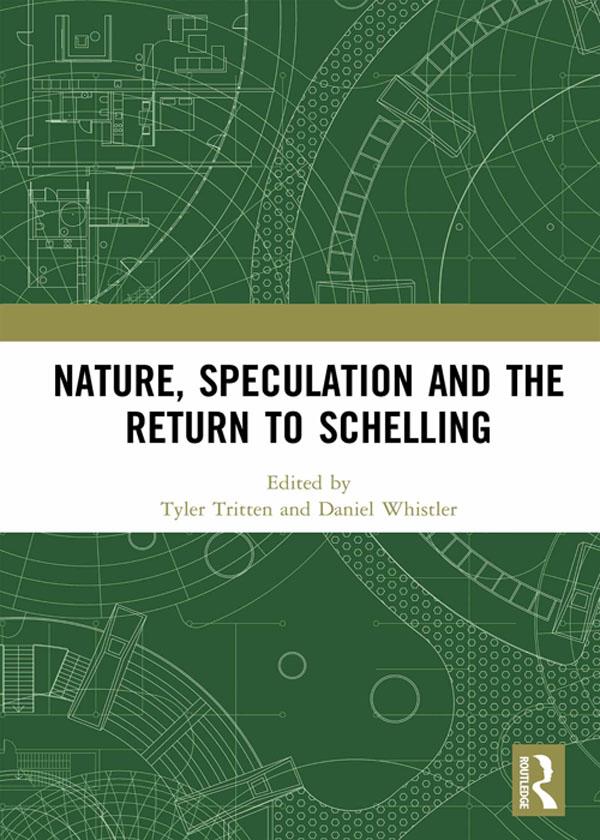
Two decades ago, Schelling first resurfaced in Žižek’s Indivisible Remainder, and the same argumentative move of redeploying Schellingian themes for contemporary ends has continued to play a significant role in critical theory since (Markus Gabriel, Iain Hamilton Grant, Jean-Luc Nancy). All the articles in this volume attempt to take seriously the idea of Schelling as a contemporary philosopher: Schelling is read in dialogue with key figures in the canon of European philosophy and critical theory (Alain Badiou, Émilie du Châtelet, Gilles Deleuze, Paul de Man, Quentin Meillassoux, Maurice Merleau-Ponty, Gilbert Simondon, Slavoj Žižek), as well as in light of recent trends in analytic philosophy (Brandomian pragmatism, powers-based metaphysics and semantic naturalism) – and such readings are not meant merely to highlight Schellingian influences or resonances in contemporary thinking but rather to challenge and interrogate current orthodoxies by insisting upon the contemporaneity of Schellingian speculation. That is, the aim is both to evaluate and constructively build upon this repeated return to Schelling: to probe, to diagnose and to experiment on the latent Schellingianisms of the present and the future. This book was originally published as a special issue of Angelaki: Journal of the Theoretical Humanities.
Pay easily by card, Klarna, Apple Pay or Google Pay. Not happy? You always have a 14-day money-back guarantee. Read more in our terms. If you have any questions, email us at hello@memmo.org.
Memmo makes studying easier – wherever you are in the world. We bring your course books and smart study tools together in one place: summaries, quizzes, podcasts and flashcards. Plus Ted, your study buddy who answers anything you wonder. Over 50,000 students already study here – built to help you learn faster and stress less.