
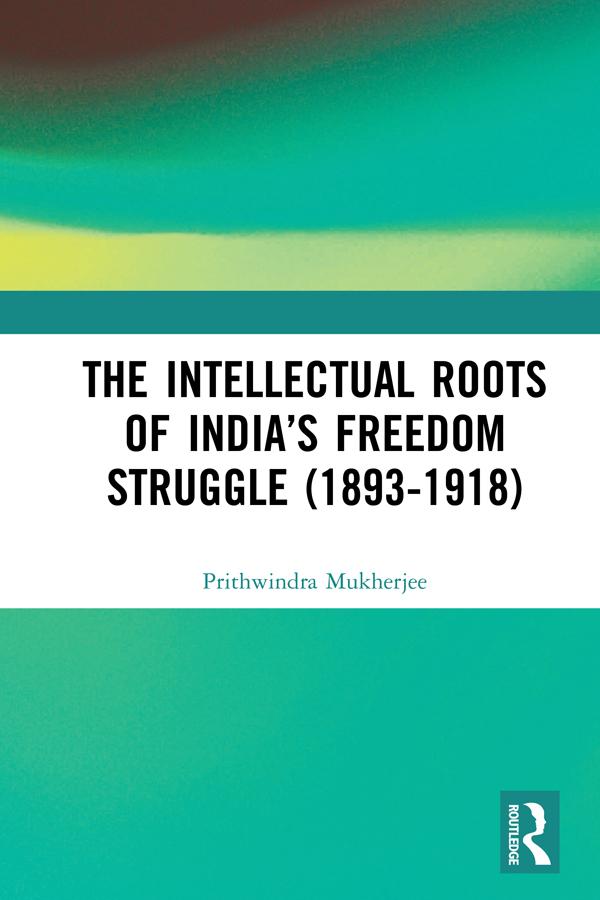
Most people believe India’s struggle for independence to have begun with Mahatma Gandhi. Little credit goes to the proof that this call for a mass movement did not arise out of a void. For the past century and more, historians have overlooked the phase of twenty-five years of intense creative endeavour preceding and preparing for the Mahatma’s advent. The reason for this systematic omission has been the fundamentally radical nature of the revolutionary programme put to practice by Indian leaders of late nineteenth and early twentieth centuries. Jugantar was diametrically distinct from the dream of non-violence floated by the Mahatma and the Congress.
Very well documented with inputs from Indian, European and American archives, the present study carefully straightenes out the origins – philosophical, historical and religious and intellectual, so to say – of Indian nationalism. From Rammohun to Sri Aurobindo, passing through Marx and Tagore, the full set of ideological views has been analysed here.
Unknown up to this day, the sustained focus in this volume on the outlook and the activities of these revolutionaries inside India and abroad brings home the ‘very sophisticated understanding of the contemporary political reality’ that made their leader Jatindranath Mukherjee, the ‘right hand man’ of Sri Aurobindo, the very emblem of an epoch and its aspirations.
Please note: Taylor & Francis does not sell or distribute the Hardback in India, Pakistan, Nepal, Bhutan, Bangladesh and Sri Lanka
Pay easily by card, Klarna, Apple Pay or Google Pay. Not happy? You always have a 14-day money-back guarantee. Read more in our terms. If you have any questions, email us at hello@memmo.org.
Memmo makes studying easier – wherever you are in the world. We bring your course books and smart study tools together in one place: summaries, quizzes, podcasts and flashcards. Plus Ted, your study buddy who answers anything you wonder. Over 50,000 students already study here – built to help you learn faster and stress less.