
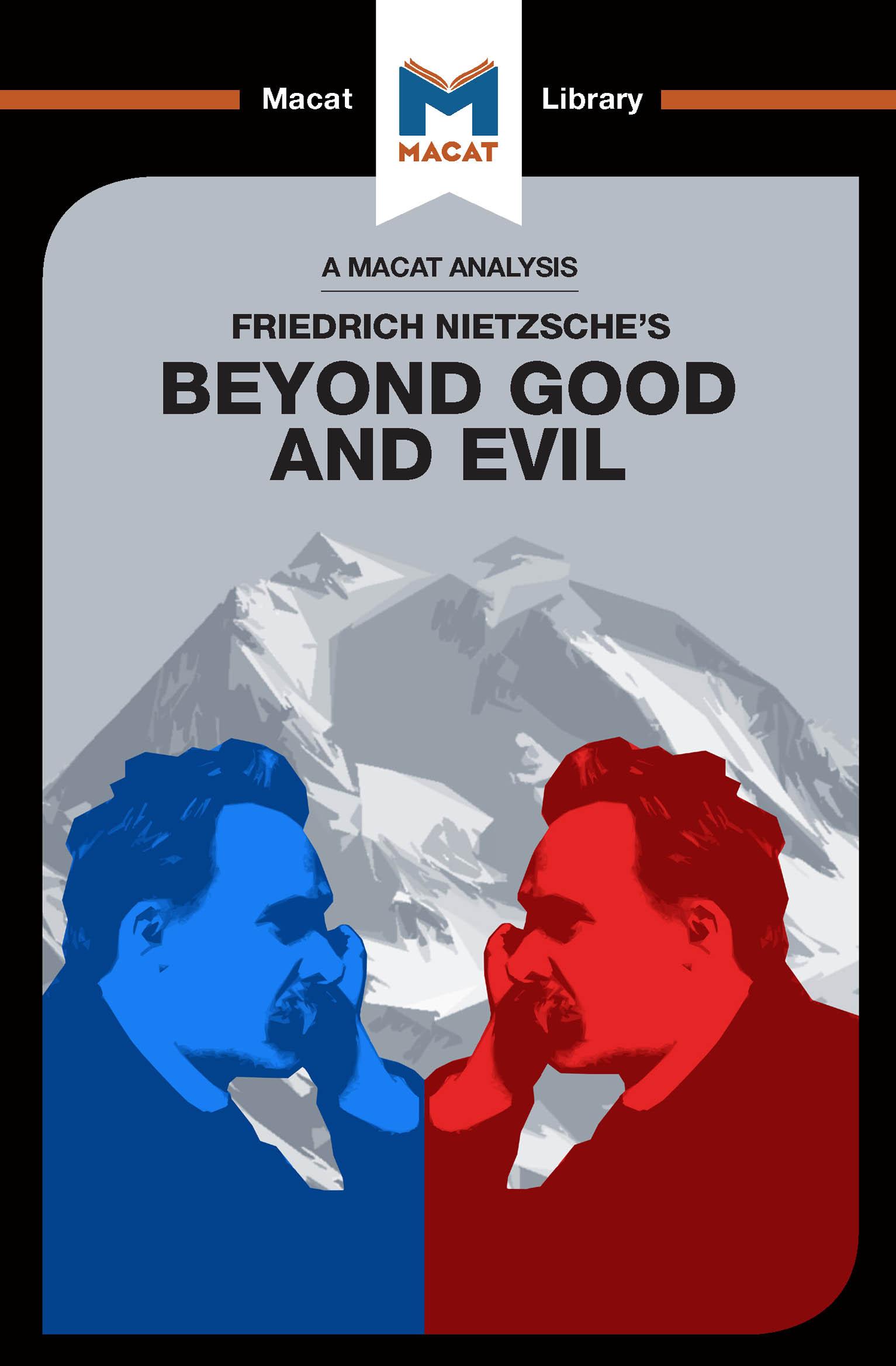
No philosopher could be a better example of creative thinking in action than Friedrich Nietzsche: a German iconoclast who systematically attacked the traditionally accepted views of academic philosophers, seeking to tear down their rickety platform and replace it with a platform of his own. Creative thinkers are people who redefine issues and topics in novel ways to create novel connections, explanations and hypotheses – people, in short, who can turn a topic on its head and present it in an entirely new light. Nietzsche called them “free spirits” – those unwilling to accept the dogmas of the past, wanting instead to think clearly for themselves.
In Beyond Good and Evil, Nietzsche focuses his attention on nothing less than the underlying basis of our moral assumptions, unleashing a powerful, polemical critique of the moral dogmas of the past and his own time. His book, which remains one of the most influential works of moral philosophy ever written, is not just an example of creative thinking at work, it is also a passionate argument for its importance. As Nietzsche wrote, “Morality in Europe … is the morality of herd animals.” But if one is ready to think differently and stand out from the herd, “other (and especially higher) moralities are … possible.”
Pay easily by card, Klarna, Apple Pay or Google Pay. Not happy? You always have a 14-day money-back guarantee. Read more in our terms. If you have any questions, email us at hello@memmo.org.
Memmo makes studying easier – wherever you are in the world. We bring your course books and smart study tools together in one place: summaries, quizzes, podcasts and flashcards. Plus Ted, your study buddy who answers anything you wonder. Over 50,000 students already study here – built to help you learn faster and stress less.