
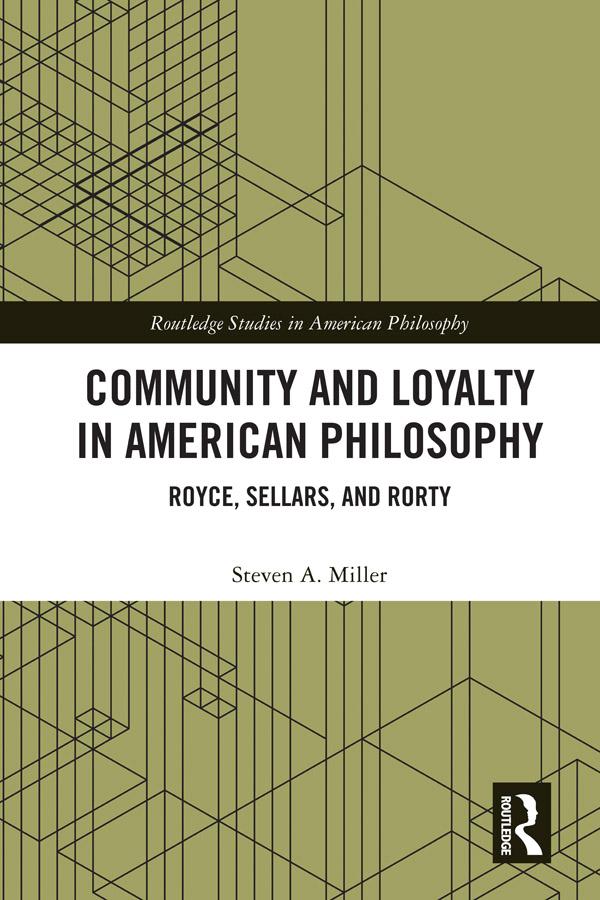
American pragmatism has always had at its heart a focus on questions of communities and ethics. This book explores the interrelated work of three thinkers influenced by the pragmatist tradition: Josiah Royce, Wilfrid Sellars, and Richard Rorty. These thinkers’ work spanned the range of twentieth-century philosophy, both historically and conceptually, but all had common concerns about how morality functions and what we can hope for in our interactions with others. Steven Miller argues that Royce, Sellars, and Rorty form a traditional line of inheritance, with the thought of each developing upon the best insights of the ones prior. Furthermore, he shows how three divergent views about the function, possibilities, and limits of moral community coalesce into a key narrative about how best we can work with and for other people, as we strive to come to think of widely different others as somehow being morally considerable as "one of us."
Pay easily by card, Klarna, Apple Pay or Google Pay. Not happy? You always have a 14-day money-back guarantee. Read more in our terms. If you have any questions, email us at hello@memmo.org.
Memmo makes studying easier – wherever you are in the world. We bring your course books and smart study tools together in one place: summaries, quizzes, podcasts and flashcards. Plus Ted, your study buddy who answers anything you wonder. Over 50,000 students already study here – built to help you learn faster and stress less.