
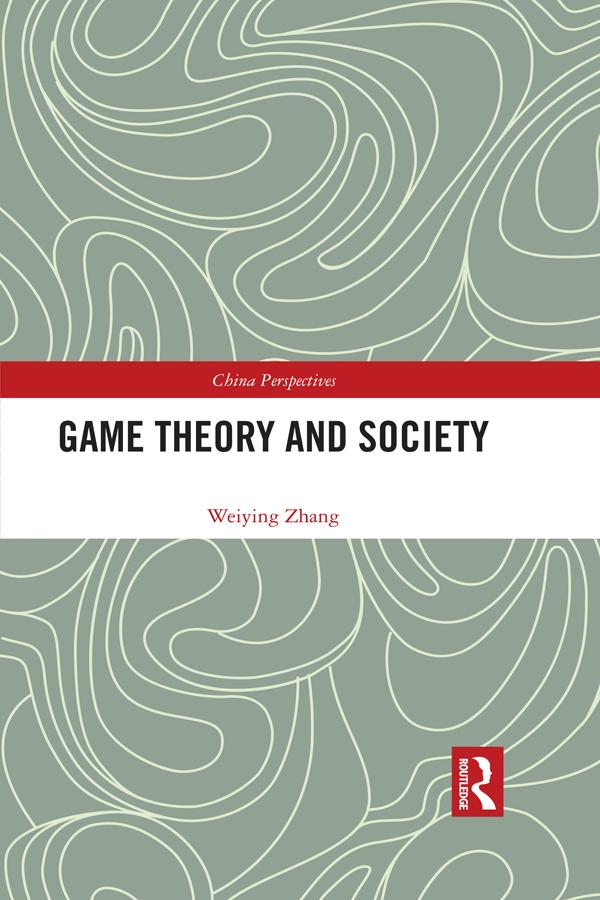
The progress of society can only happen through interpersonal cooperation, because only cooperation can bring about mutual benefit, thus bringing happiness to each person. This should be our collective rationality, but we often see it conflicts with individual interests, which leads to the so-called "Prisoners’ Dilemma" and does not bring happiness to all.
From a game theoretical perspective, this book addresses the issue of how people can cooperate better. It has two objectives. The first is to use common language to systematically introduce the basic methodologies and core conclusions of Game Theory, including the Nash equilibrium, multiple equilibriums, dynamic games, etc. Mathematics and theoretical models are used to the minimum necessary scope too, to make this book get access to ordinary readers with elementary mathematical training. The second objective is to utilize these methods and conclusions to analyze various Chinese social issues and institutional arrangements, with a focus on the reasons people exhibit non-cooperative behaviors as well as the institutions and cultures that promote interpersonal cooperation.
In addition to economics, specialists in sociology, law, history, politics and management will also be attracted by this book for its insightful analysis on the issue of cooperation in these fields. Also, readers curious about Chinese society will benefit from this book.
Pay easily by card, Klarna, Apple Pay or Google Pay. Not happy? You always have a 14-day money-back guarantee. Read more in our terms. If you have any questions, email us at hello@memmo.org.
Memmo makes studying easier – wherever you are in the world. We bring your course books and smart study tools together in one place: summaries, quizzes, podcasts and flashcards. Plus Ted, your study buddy who answers anything you wonder. Over 50,000 students already study here – built to help you learn faster and stress less.