
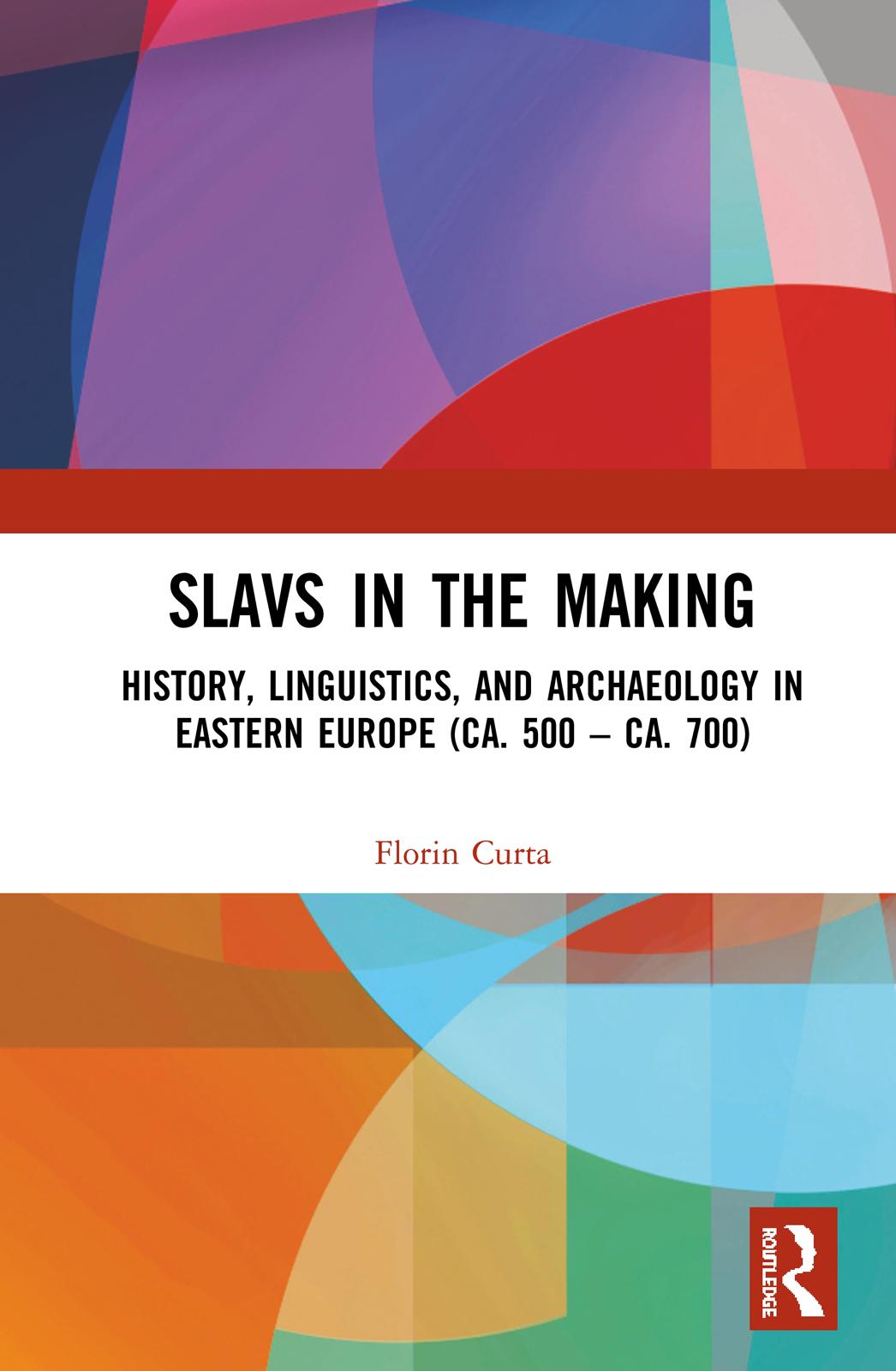
Slavs in the Making takes a fresh look at archaeological evidence from parts of Slavic-speaking Europe north of the Lower Danube, including the present-day territories of the Czech Republic, Slovakia, Poland, Belarus, Ukraine, and Russia.
Nothing is known about what the inhabitants of those remote lands called themselves during the sixth century, or whether they spoke a Slavic language. The book engages critically with the archaeological evidence from these regions, and questions its association with the "Slavs" that has often been taken for granted. It also deals with the linguistic evidence—primarily names of rivers and other bodies of water—that has been used to identify the primordial homeland of the Slavs, and from which their migration towards the Lower Danube is believed to have started. It is precisely in this area that sociolinguistics can offer a serious alternative to the language tree model currently favoured in linguistic paleontology. The question of how best to explain the spread of Slavic remains a controversial issue. This book attempts to provide an answer, and not just a critique of the method of linguistic paleontology upon which the theory of the Slavic migration and homeland relies.
The book proposes a model of interpretation that builds upon the idea that (Common) Slavic cannot possibly be the result of Slavic migration. It addresses the question of migration in the archaeology of early medieval Eastern Europe, and makes a strong case for a more nuanced interpretation of the archaeological evidence of mobility. It will appeal to scholars and students interested in medieval history, migration, and the history of Eastern and Central Europe.
Pay easily by card, Klarna, Apple Pay or Google Pay. Not happy? You always have a 14-day money-back guarantee. Read more in our terms. If you have any questions, email us at hello@memmo.org.
Memmo makes studying easier – wherever you are in the world. We bring your course books and smart study tools together in one place: summaries, quizzes, podcasts and flashcards. Plus Ted, your study buddy who answers anything you wonder. Over 75,000 students already study here – built to help you learn faster and stress less.