
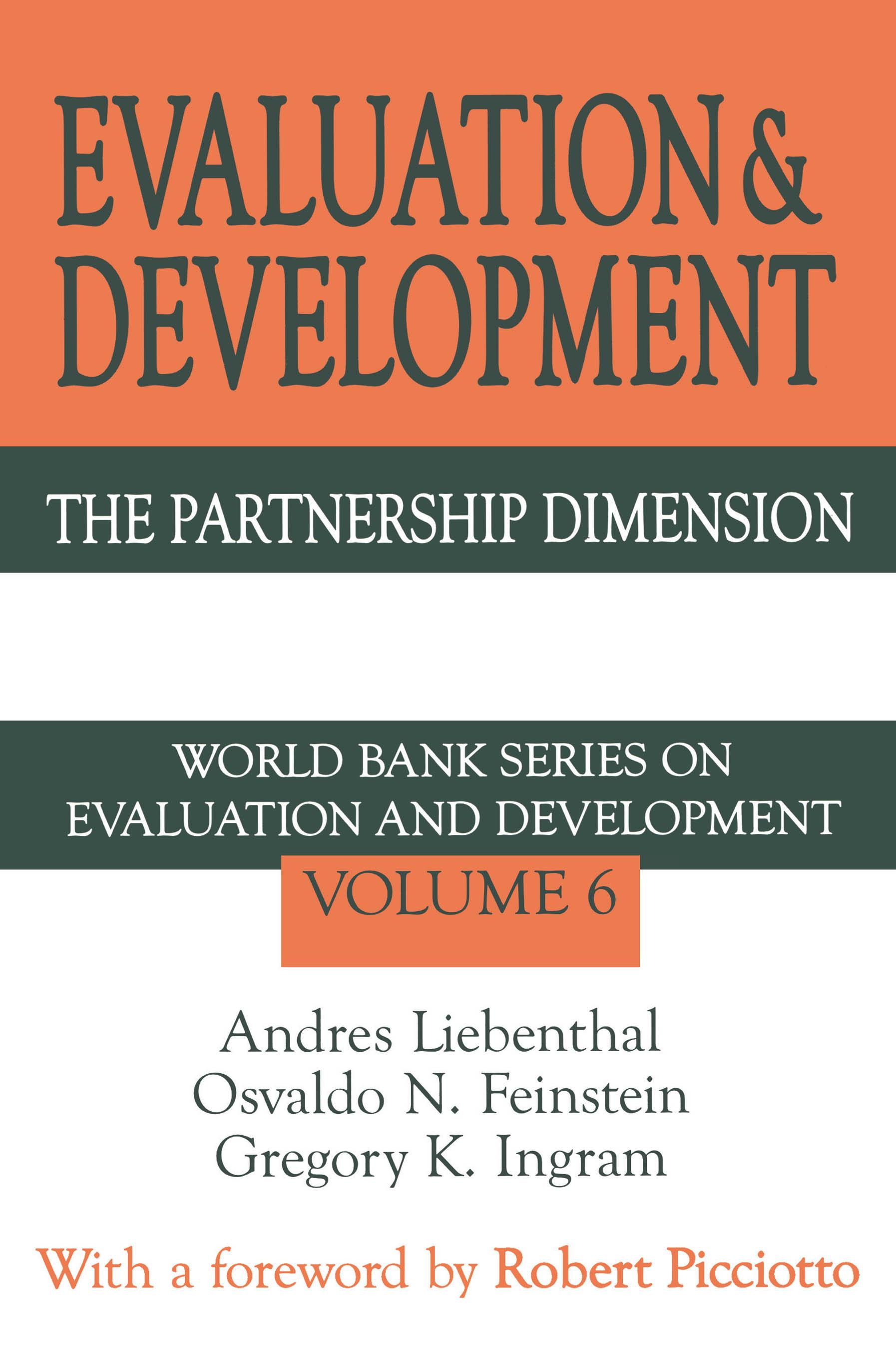
Partnership is of growing importance in development work. Partnerships among state, private business, and civil society organizations are increasingly used to deliver the goods and services required for balanced growth and poverty reduction. Aid activities have shifted from a project focus to a more strategic and holistic focus on programs, sectors, and policies. With this new orientation, partnerships are often essential to deal with the added complexity and the larger number of agencies, groups, and stakeholders involved.The Partnership Dimension takes on the issues in a series of chapters divided into two general parts: Part 1, "Foundations of Partnership and Their Evaluation," covers the types of development partnership and critical issues involved, and Part 2, "Partnerships in Practice," then illustrates the aspects and lessons of partnership experience through a series of case studies. Many of the studies focus on the benefits of partnerships between institutions of government and civil society. Benefits include effective knowledge transfer, greater cross-national cooperation, the creation of new networks and capacity, and penetration of new markets. Private firms use partnerships with competitors to learn or reduce risk.There is much to learn about when, where, and how best to use partnerships, and, in particular, partnerships that involve less traditional combinations of actors, such as global partnerships for public policy, country-focused aid partnerships, private sector partnerships for knowledge creation, and partnerships for community development involving business, nongovernmental organizations, and government.Relatively little is known about the costs and benefits, and the risks and rewards, of different types of partnerships, or about how best to conduct partnerships for different purposes. This is why the current volume in the World Bank series is relevant for both development practitioners and policy analysts.
Pay easily by card, Klarna, Apple Pay or Google Pay. Not happy? You always have a 14-day money-back guarantee. Read more in our terms. If you have any questions, email us at hello@memmo.org.
Memmo makes studying easier – wherever you are in the world. We bring your course books and smart study tools together in one place: summaries, quizzes, podcasts and flashcards. Plus Ted, your study buddy who answers anything you wonder. Over 50,000 students already study here – built to help you learn faster and stress less.