
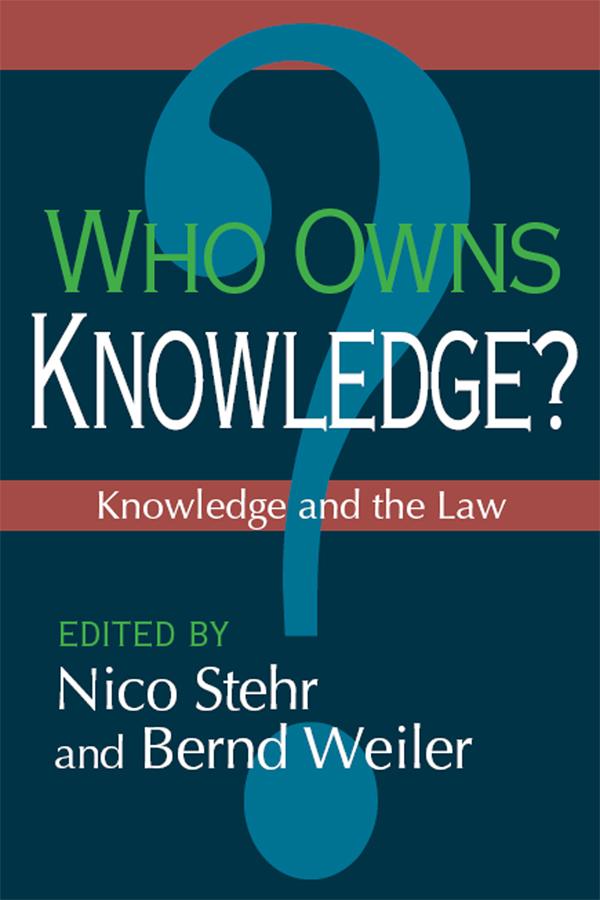
Who Owns Knowledge? explores the emerging linkages between the extension of knowledge and the law. It anticipates that the legal system will not only be called upon to adjudicate in matters of creative minds, but will be expected to do so to an ever increasing degree.
Linkages between the legal system and knowledge are bound to multiply in modern societies. Ironically, while increasingly relying on knowledge, we are simultaneously investing significant resources into controlling this same knowledge. This includes developing a system of legal governance over how knowledge is extended or enlarged. Such modes of governance may take the form of regulatory legal codes, or legal challenges and judgments that shape the evolution of modern society and potentially transform knowledge itself, as a productive force. Who Owns Knowledge? asks such questions as: What is the appropriate balance of public and private interests involved in this process? How can creative powers, natural resources and indigenous knowledge be protected from either public or private exploitation? Does the law have the power to prevent this exploitation, or is adaptive technology needed? Also, in this identity theft conscious age, how can the rights of the individual be protected against policies allowing access to any kind of information, especially confidential information? The editors and contributors demonstrate that the relationship between knowledge and the law needs to be further researched and discussed. Who Owns Knowledge? is a must-read for those interested in the subjects of intellectual property, the history and development of modern legal and economic systems and their entanglements, and how judicial systems make choices between the legal and economic systems and, especially, between the public and private good and their often opposing interests.
Pay easily by card, Klarna, Apple Pay or Google Pay. Not happy? You always have a 14-day money-back guarantee. Read more in our terms. If you have any questions, email us at hello@memmo.org.
Memmo makes studying easier – wherever you are in the world. We bring your course books and smart study tools together in one place: summaries, quizzes, podcasts and flashcards. Plus Ted, your study buddy who answers anything you wonder. Over 50,000 students already study here – built to help you learn faster and stress less.