
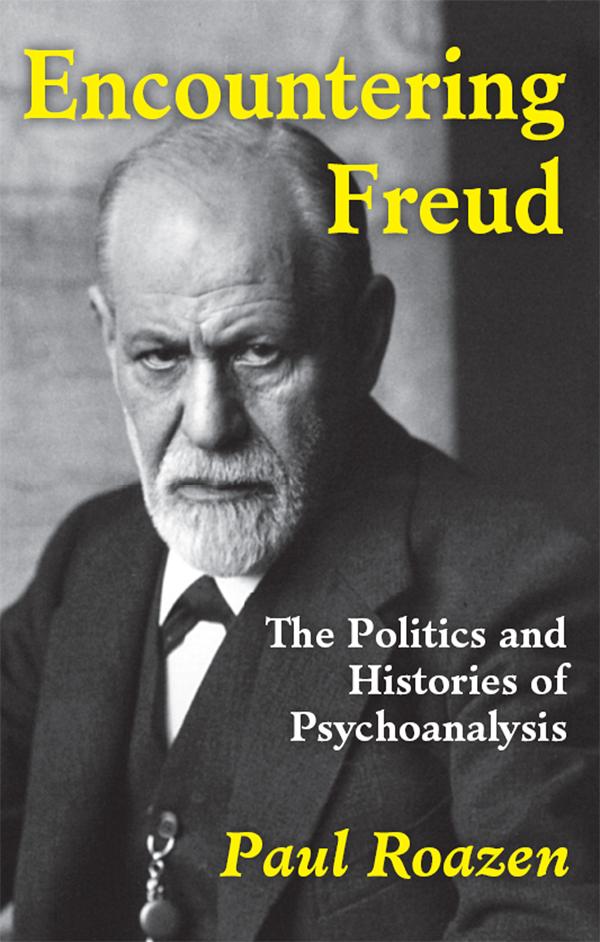
In this volume Paul Roazen examines different national responses to Freud and the beginnings of psychoanalysis. He examines Freud's work in the contexts of law, society, and class, as well as other forms of psychology.
Encountering Freud includes a brilliant essay on Freud and the question of psychoanalysis' contribution to radical thought, in contrast to the conservative tradition. Roazen takes up the extravagant claims of Marcuse and Reich, and sees the risks of then overglamorization of the beginnings of psychoanalysis as a profession. Roazen views the legacies of Harry Stack Sullivan, Helene Deutsch, and Erik H. Erikson as less rich because their work conformed to the social status quo. He sees Freud's inability to avoid an ambiguous outcome as a lack of concern with normality and a refusal to own up to the wide variety of psychological solutions he found both therapeutically tolerable and humanly desirable.
Roazen concludes with a series of explorations on the dichotomies Freud left behind: clinical discoveries versus philosophical standpoints; the relationship of normality to nihilism; and a defense of a therapeutic setting based on trained specialists versus a therapeutic approach encouraging self-expression. This is a volume that utilizes a sharp focus on Freud and his followers and dissenters to explore the question of political psychology at one end and psych-history at the other end of analysis.
Pay easily by card, Klarna, Apple Pay or Google Pay. Not happy? You always have a 14-day money-back guarantee. Read more in our terms. If you have any questions, email us at hello@memmo.org.
Memmo makes studying easier – wherever you are in the world. We bring your course books and smart study tools together in one place: summaries, quizzes, podcasts and flashcards. Plus Ted, your study buddy who answers anything you wonder. Over 50,000 students already study here – built to help you learn faster and stress less.