
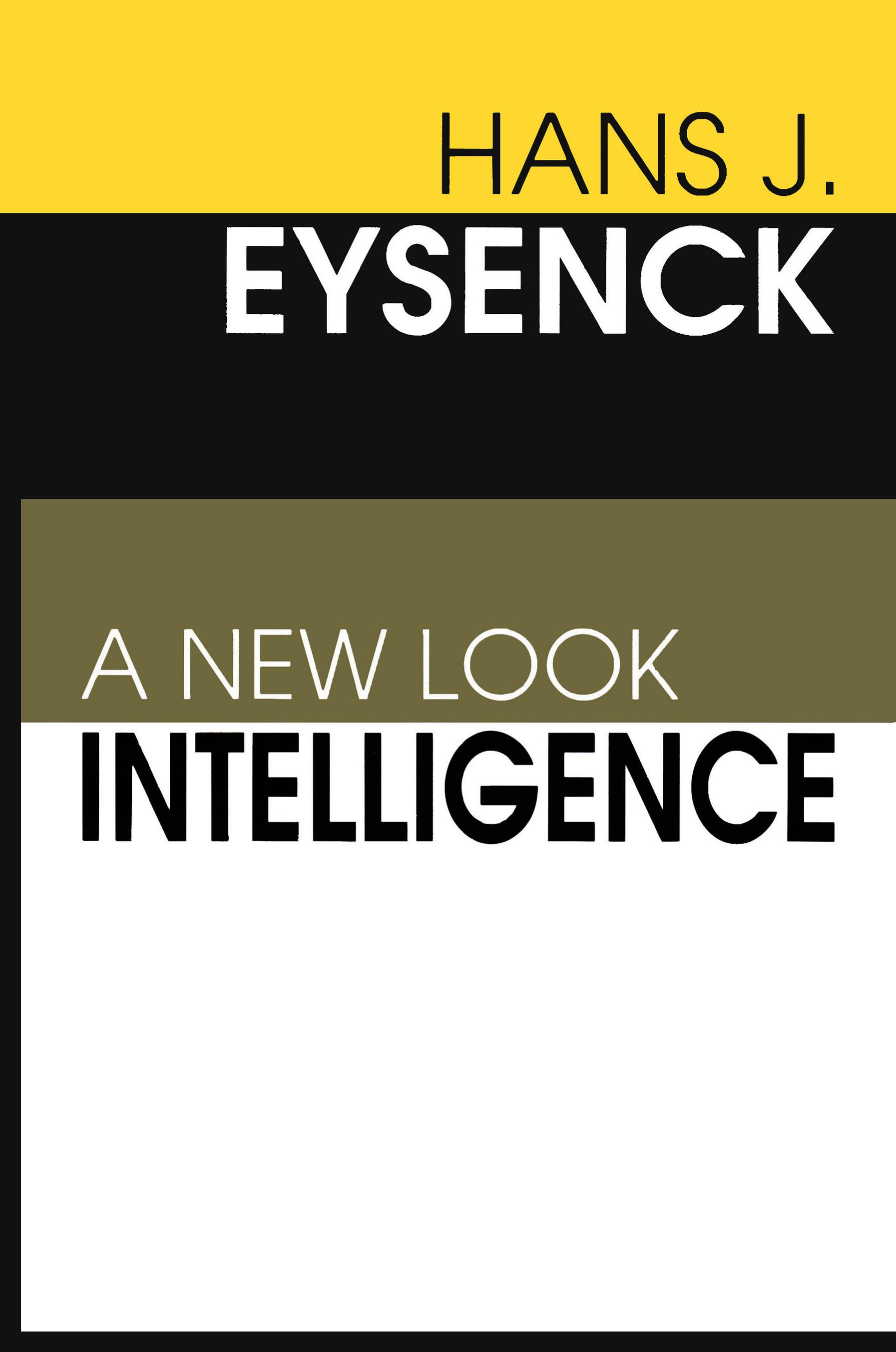
The concept and measurement of intelligence present a curious paradox. On the one hand, scientists, fluent in the complex statistics of intelligence-testing theories, devote their lives to exploration of cognitive abilities. On the other hand, the media, and inexpert, cross-disciplinary scientists decry the effort as socially divisive and useless in practice. In the past decade, our understanding of testing has radically changed. Better selected samples have extended evidence on the role of heredity and environment in intelligence. There is new evidence on biology and behavior. Advances in molecular genetics have enabled us to discover DMA markers which can identify and isolate a gene for simple genetic traits, paving the way for the study of multiple gene traits, such as intelligence.
Hans Eysenck believes these recent developments approximate a general paradigm which could form the
basis for future research. He explores the many special abilities verbal, numerical, visuo-spatial memory that contribute to our cognitive behavior. He examines pathbreaking work on "multiple" intelligence, and the notion of "social" or "practical" intelligence and considers whether these new ideas have any scientific meaning. Eysenck also includes a study of creativity and intuition as well as the production of works of art and science identifying special factors that interact with general intelligence to produce predictable effects in the actual world.
The work that Hans Eysenck has put together over the last fifty years in research into individual differences constitutes most of what anyone means by the structure and biological basis of personality and intelligence. A giant in the field of psychology, Eysenck almost single-handedly restructured and reordered his profession. Intelligence is Eysenck's final book and the third in a series of his works from Transaction.
Pay easily by card, Klarna, Apple Pay or Google Pay. Not happy? You always have a 14-day money-back guarantee. Read more in our terms. If you have any questions, email us at hello@memmo.org.
Memmo makes studying easier – wherever you are in the world. We bring your course books and smart study tools together in one place: summaries, quizzes, podcasts and flashcards. Plus Ted, your study buddy who answers anything you wonder. Over 50,000 students already study here – built to help you learn faster and stress less.