
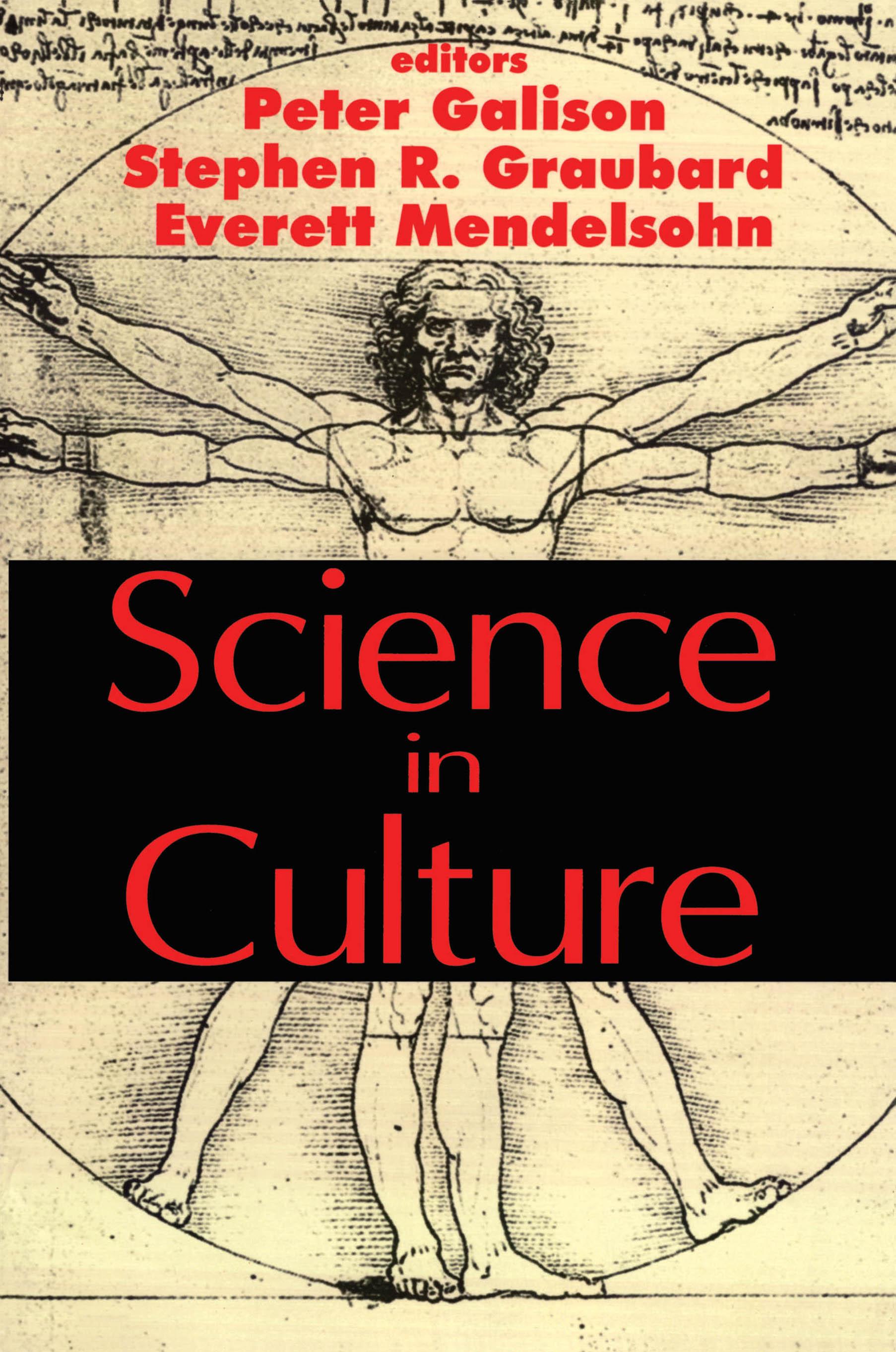
Twenty-five years ago, Gerald Holton's Thematic Origins of Scientific Thought introduced a wide audience to his ideas. Holton argued that from ancient times to the modern period, an astonishing feature of innovative scientific work was its ability to hold, simultaneously, deep and opposite commitments of the most fundamental sort. Over the course of Holton's career, he embraced both the humanities and the sciences. Given this background, it is fitting that the explorations assembled in this volume reflect both individually and collectively Holton's dual roots.
In the opening essay, Holton sums up his long engagement with Einstein and his thematic commitment to unity. The next two essays address this concern. In historicized form, Lorraine Daston returns the question of the scientific imagination to the Enlightenment period when both sciences and art feared imagination. Daston argues that the split whereby imagination was valued in the arts and loathed in the sciences is a nineteenth-century divide. James Ackerman on Leonardo da Vinci meshes perfectly with Daston's account, showing a form of imaginative intervention where it is irrelevant to draw analogies between art and science. Historians of religion Wendy Doniger and Gregory Spinner pursue the imagination into the bedroom with literary-theological representations. Science, culture, and the imagination also intersect with biologist Edward Wilson and physicist Steven Weinberg. Both tackle the big question of the unity of knowledge and worldviews from a scientific perspective while art historian Ernst Gombrich does the same from the perspective of art history. To emphasize the nitty-gritty of scientific practice, chemists Bretislav Fredrich and Dudley Herschback provide a remarkable historical tour at the boundary of chemistry and physics. In the concluding essay, historian of education Patricia Albjerg Graham addresses pedagogy head-on.
In these various reflections on science, art, literature, philosophy, and education, this volume gives us a view in common: a deep and abiding respect for Gerald Holton's contribution to our understanding of science in culture.
Peter Galison is Mallinckrodt Professor of History of Science and of physics at Harvard University. Stephen R. Graubard is editor of the American Academy of Arts and Sciences and its journal, Daedalus, and professor of history emeritus at Brown University. Everett Mendelsohn is director of the History of Science Program at Harvard University.
Pay easily by card, Klarna, Apple Pay or Google Pay. Not happy? You always have a 14-day money-back guarantee. Read more in our terms. If you have any questions, email us at hello@memmo.org.
Memmo makes studying easier – wherever you are in the world. We bring your course books and smart study tools together in one place: summaries, quizzes, podcasts and flashcards. Plus Ted, your study buddy who answers anything you wonder. Over 50,000 students already study here – built to help you learn faster and stress less.