
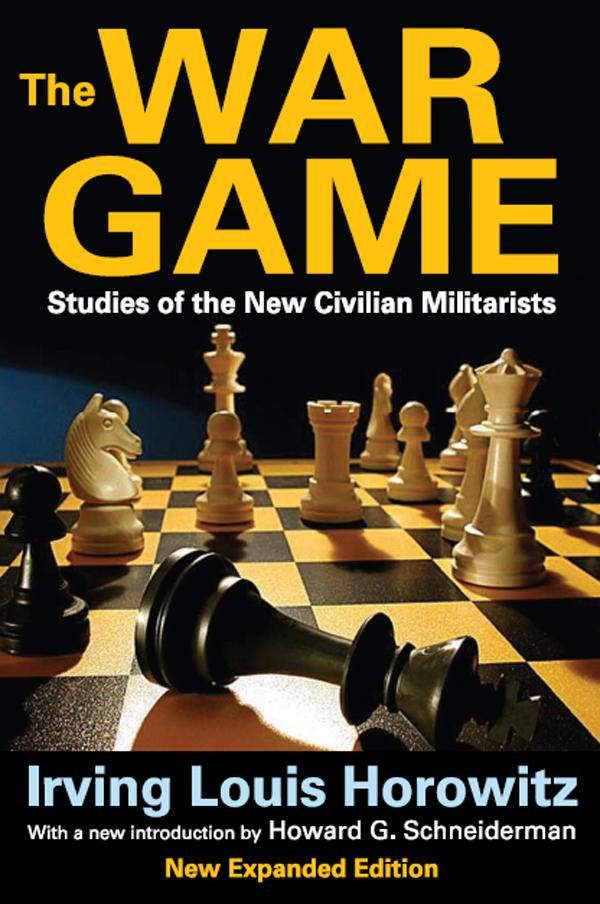
War gaming has become a characteristic feature of modern life. From amateur clubs to professional academicians playing the war game in the company of military circles, we have come up against the phenomenon of the "robotization" of human life. Irving Louis Horowitz argues that those who protest the idea that war is a game do so on moral grounds that leave unanswered tough questions: What is the alternative to playing the game? What will become of us if we allow the opponent to become the better "player" in an all-or-nothing game of extinction?
Horowitz provides answers in a logical manner while focusing on facts and ethical alternatives to risky ethics. The work is divided into three sections: The New Civilian Militarists, Thermonuclear Peace and Its Political Equivalents, and General Theory of Conflict and Conflict Resolution. Included are such topics as arms, policies, and games; morals, missiles, and militarism; and conflict, consensus, and cooperation.
Horowitz concludes that it is time to register the fact that the basic option to destructive uses of science is not traditional morality, but better science a science of survival. With a new introduction by Howard Schneiderman along with a major essay and other materials not included in the original edition, this classic work is a worthy contribution to intellectual debate in the twenty-first century and a must read for military strategists, sociologists, and historians.
Pay easily by card, Klarna, Apple Pay or Google Pay. Not happy? You always have a 14-day money-back guarantee. Read more in our terms. If you have any questions, email us at hello@memmo.org.
Memmo makes studying easier – wherever you are in the world. We bring your course books and smart study tools together in one place: summaries, quizzes, podcasts and flashcards. Plus Ted, your study buddy who answers anything you wonder. Over 50,000 students already study here – built to help you learn faster and stress less.