
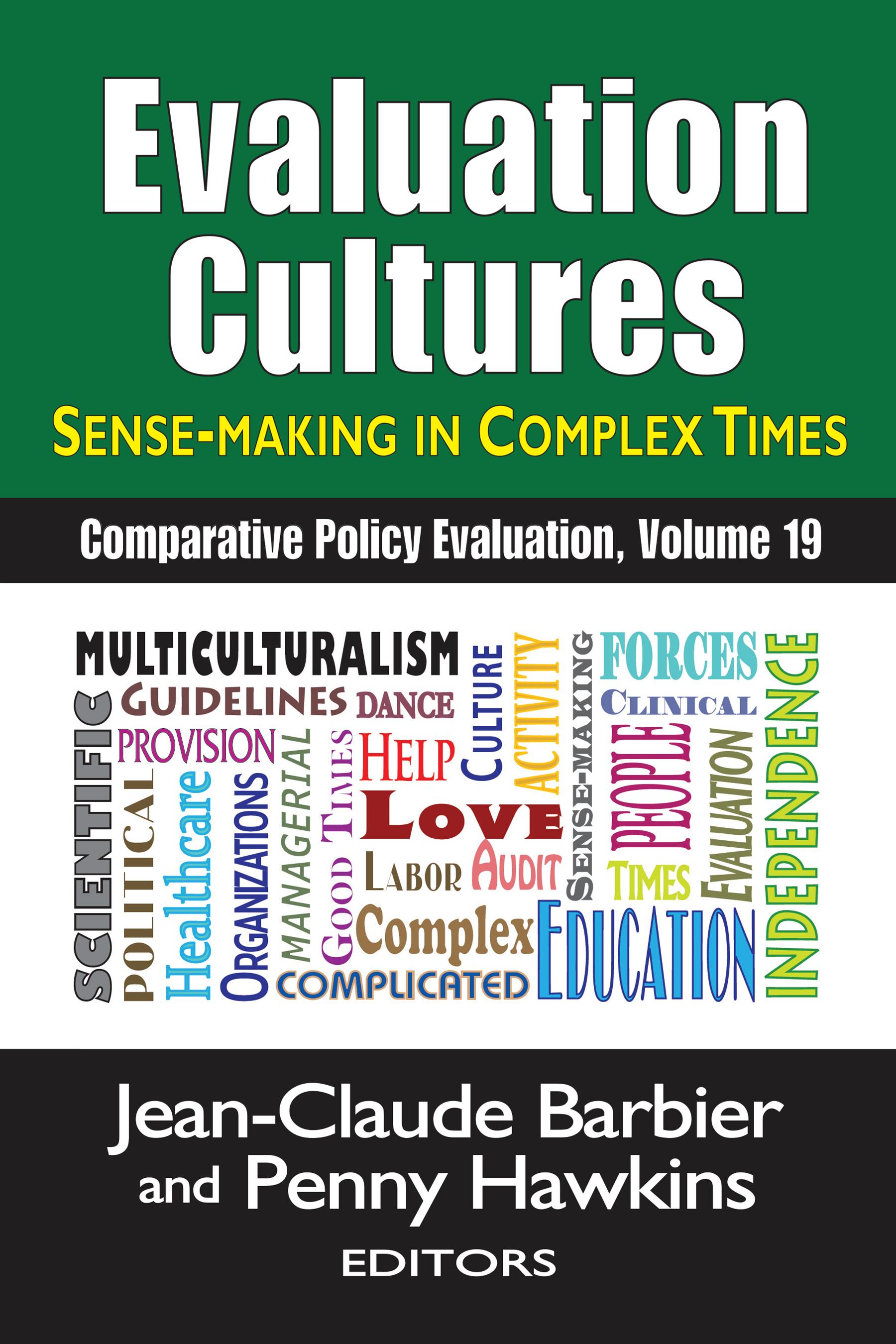
Evaluation Cultures draws upon a sample of reflections, drawn from organizational practices, nationally centered political cultures, and ethnic cultures, as a framework for understanding how culture influences the work of evaluation. Two main conclusions seem to emerge: first, that there exists no single, uniform, and homogenous national evaluation culture; second, that the idea of a unified transnational culture of evaluation is an illusion.The evaluation community includes a diverse group of professionals; a diversity that is not just represented in national or ethnic culture but also in academic backgrounds, public and private sector allegiances, and personal character. The contributors to this book represent, in part, this diversity by reflecting a range of views.Evaluation Cultures draws upon the experience of senior evaluation practitioners, who share their reflections on their practice and experience, in order to put forth challenges to purely academic analysis. Evaluation Cultures presents a consistent, if not exhaustive, attempt to give analytical and empirical sense to all of the cultures of the evaluation community.
Pay easily by card, Klarna, Apple Pay or Google Pay. Not happy? You always have a 14-day money-back guarantee. Read more in our terms. If you have any questions, email us at hello@memmo.org.
Memmo makes studying easier – wherever you are in the world. We bring your course books and smart study tools together in one place: summaries, quizzes, podcasts and flashcards. Plus Ted, your study buddy who answers anything you wonder. Over 50,000 students already study here – built to help you learn faster and stress less.