
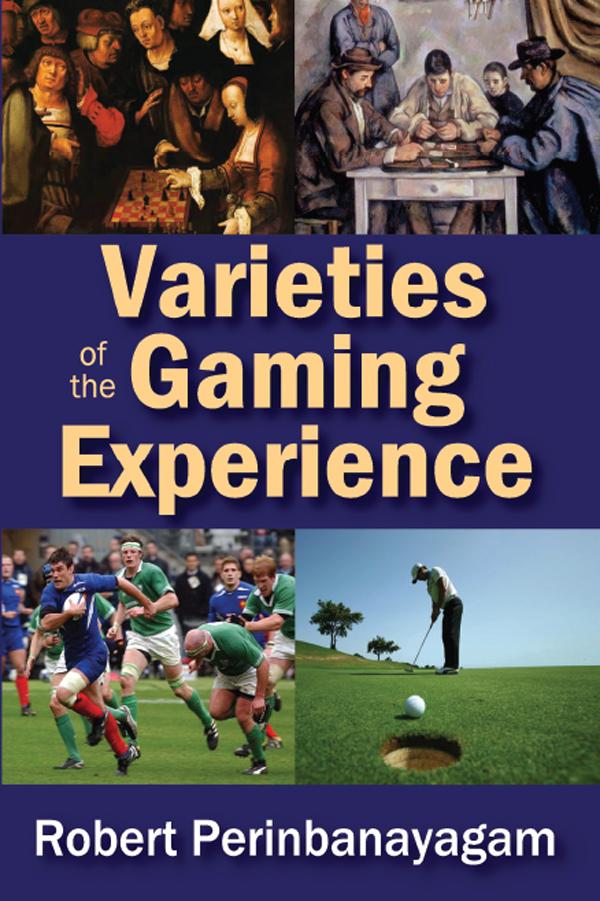
The games that human societies devised over the centuries can be considered one of the most comprehensive and fertile symbolic systems ever created by human ingenuity. In all societies, members feel compelled to interact and communicate with each other as much as possible. As linguistic creatures, humans use language to establish social and interpersonal contacts. Games are a device to enable such connections.
Robert Perinbanayagam examines how players value games. He assesses games as systems that embody metaphysics and pragmatic action. He then examines various religious ideas and how participants reference respective approaches to game playing.
Perinbanayagam argues that games are forms of activity in which the human agent as an actor engages with others in various interactional situations. Such engagement creates dramas in which agents assume identities, give play to emotions and enrich their selves. He also examines the issue of game writing, particularly how selected writers have used game structures as narrative devices in their work.
Pay easily by card, Klarna, Apple Pay or Google Pay. Not happy? You always have a 14-day money-back guarantee. Read more in our terms. If you have any questions, email us at hello@memmo.org.
Memmo makes studying easier – wherever you are in the world. We bring your course books and smart study tools together in one place: summaries, quizzes, podcasts and flashcards. Plus Ted, your study buddy who answers anything you wonder. Over 50,000 students already study here – built to help you learn faster and stress less.