
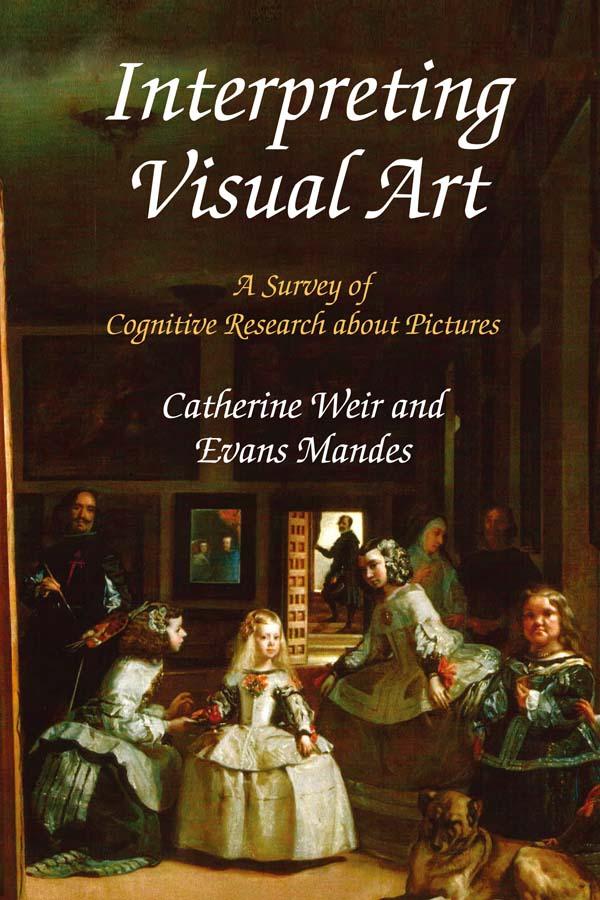
Interpreting Visual Art explores the psychological and cognitive mechanisms that underlie one's interpretation of art. After the brain encodes visual information, this encoding is then processed by perceptual mechanisms to identify objects and depth in pictures. The brain incorporates many factors in order for people to "see" the art. Cognitive processes have a major role in how people interpret artworks because attention, memory, and language are also linked to the aesthetic experience. Catherine Weir and Evans Mandes first examine major attributes of aesthetic judgement - balance, symmetry, color, line, and shape - from an empirical point of view as opposed to more philosophical and speculative approaches. Then, they explore the perceptual process, paying special attention to art history in the Western world and emphasizing techniques from cave paintings to modern art. The role beauty and emotions play in our interpretations of pictures have been investigated from many approaches: evolutionary psychology, neuroscience, and appraisal theory. Through the application of empirical research in cognitive science to master works from Botticelli to Pollock, readers are introduced to a research-oriented understanding of how art has been perceived, interpreted, and appreciated in the twenty-first century. This book will appeal to those interested in art as well as those teaching art history, psychology, and neuroscience.
Pay easily by card, Klarna, Apple Pay or Google Pay. Not happy? You always have a 14-day money-back guarantee. Read more in our terms. If you have any questions, email us at hello@memmo.org.
Memmo makes studying easier – wherever you are in the world. We bring your course books and smart study tools together in one place: summaries, quizzes, podcasts and flashcards. Plus Ted, your study buddy who answers anything you wonder. Over 50,000 students already study here – built to help you learn faster and stress less.
You might also like
Buy the book0