
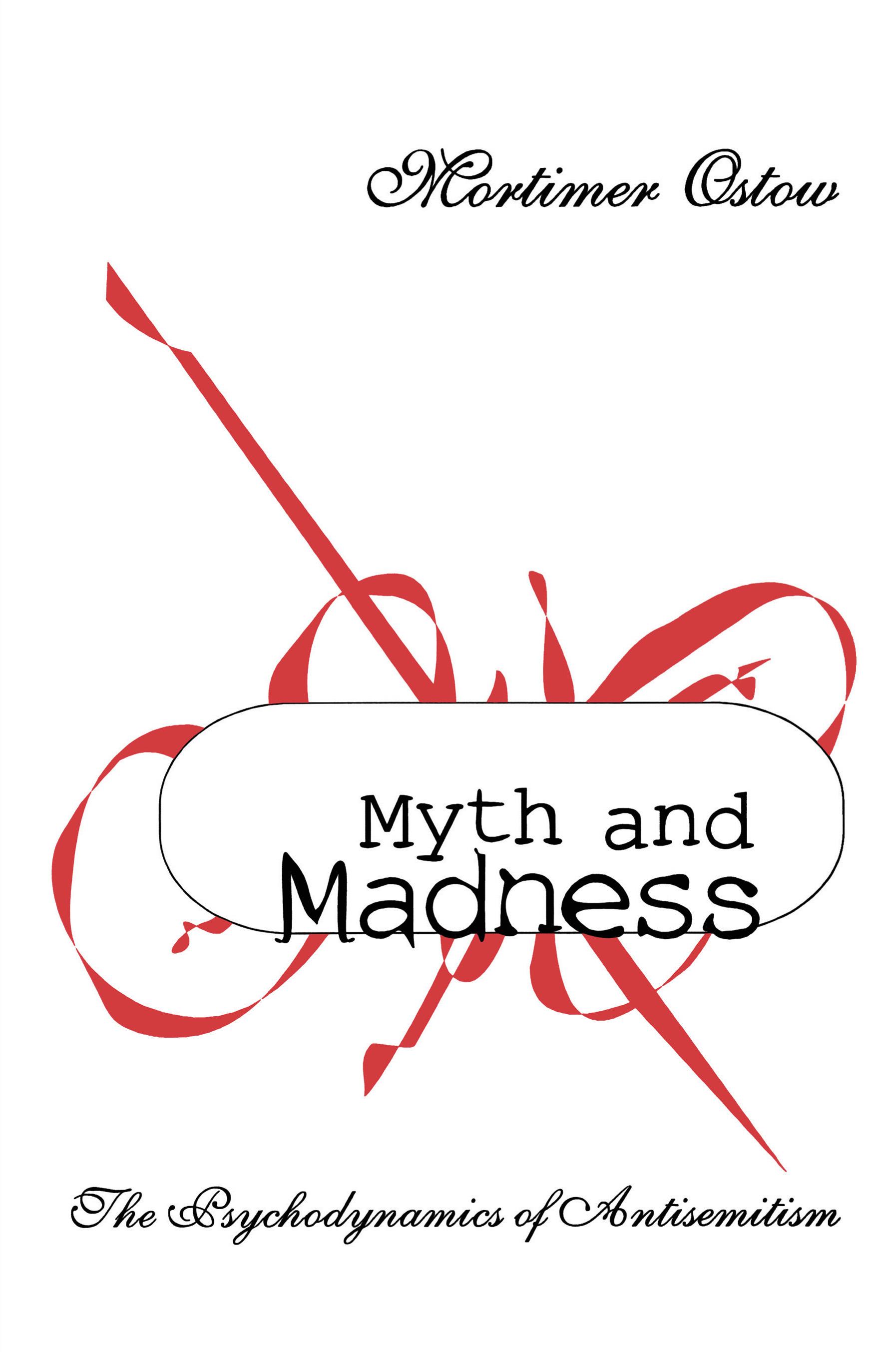
The persistence of anti-Semitism and its current resurgence after a brief post-Holocaust suppression, challenge those who study human behavior to locate the causal bases of anti-Semitism and find approaches to combat it. This is an astonishing report of a nine-year study of the psychodynamics of anti-Semitism. Undertaken by Dr. Mortimer Ostow on behalf of the Psychoanalytic Research and Development Fund, it puts flesh and bones on the discussion of antisemitism in Sigmund Freud's 1939 classic theoretical study Moses and Monotheism. Its close adherence to case material, and application of psychoanalytic theory to historical data and cultural products, yields new insights into bigotry and equity alike.
By examining prejudiced patients and their myths, Dr. Ostow shows the common threads of anti-Semitism in a variety of national and cultural settings, even under supposed optimal conditions when antisemitism is stringently controlled. The work uses the psychiatric approach, and can be read as a study of how this area of behavioral science reveals the interplay of the individual and the group, cultural background and material opportunities.
The book is divided into five major segments: Psychoanalytic interpretation of anti-Semitism in the past; clinical data on anti-Semitic sentiments in a variety of personal and national settings; mythological dimensions of anti-Semitism and apocalyptic doctrines; specific anti-Semitic myths including pre-Christian early and medieval Christian, "racial" and post-modern Muslim anti-Semitism. The final segment focuses on the pogrom mentality, including the Nazi phenomenon, antisemitic fundamentalism, and black anti-Semitism.
Myth and Madness is informed by an amazing breadth of learning: from biblical exegesis to modern sociology, from close attention to mundane patients to evaluating mythic claims of the loftiest, and at times most dangerous sort. This is a landmark effort—one that will be the touchstone for theoretical and clinical works to come.
Pay easily by card, Klarna, Apple Pay or Google Pay. Not happy? You always have a 14-day money-back guarantee. Read more in our terms. If you have any questions, email us at hello@memmo.org.
Memmo makes studying easier – wherever you are in the world. We bring your course books and smart study tools together in one place: summaries, quizzes, podcasts and flashcards. Plus Ted, your study buddy who answers anything you wonder. Over 50,000 students already study here – built to help you learn faster and stress less.