
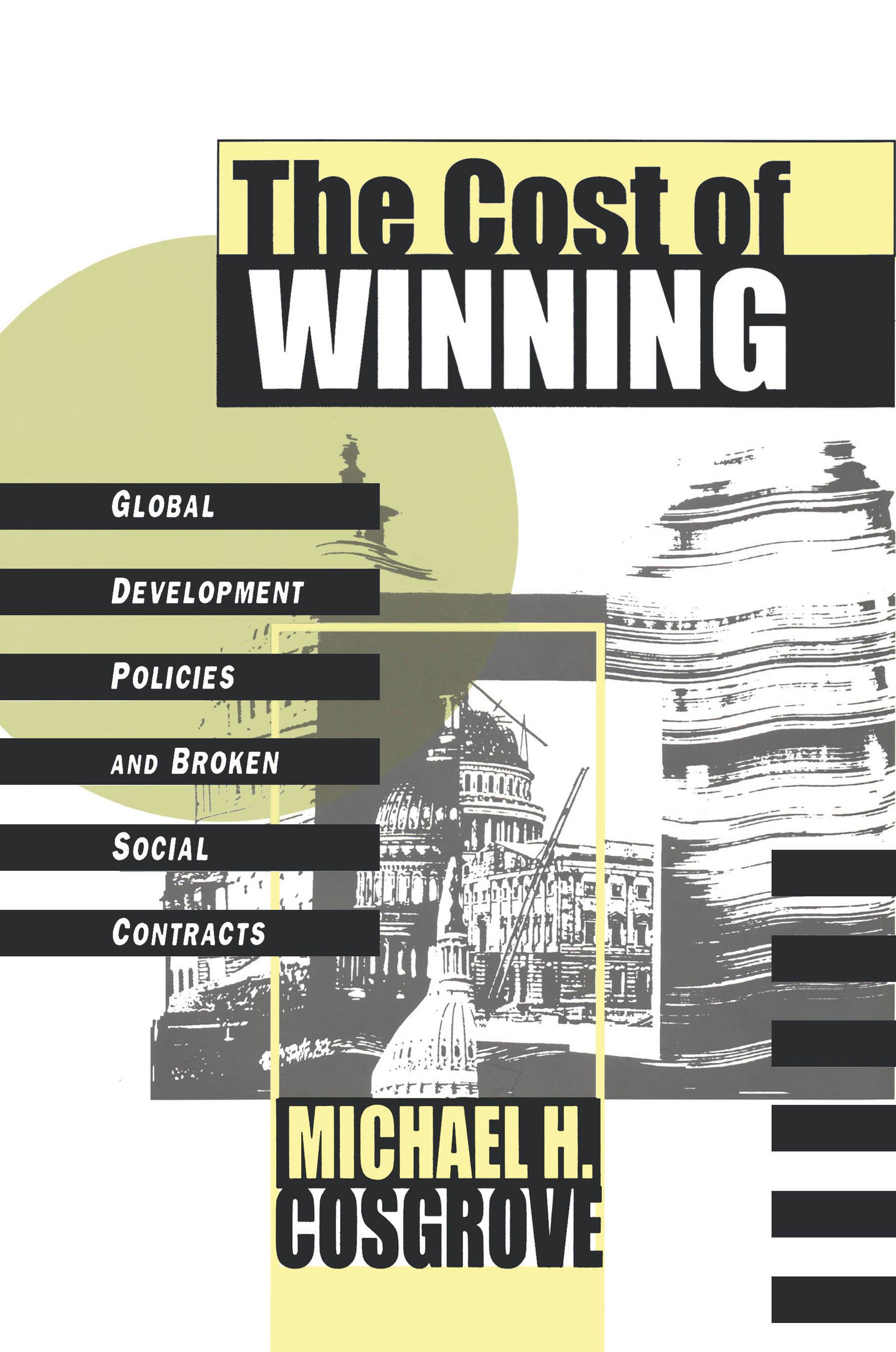
In The Cost of Winning, Michael H. Cosgrove describes how the United States used economic policies to contain the Soviet Union during the post-World War n era and how those policies turned a vibrant American economy into one of broken promises and declining power. Cosgrove defines and examines the five economic building blocks used to contain the Soviets in America's Golden Age: the Marshall Plan, free trade, federal income tax policy, the American defense umbrella, and plentiful and cheap oil from the Middle East. He explains how policies supporting these building blocks allowed U.S. taxpayers to both contain the Soviets and enjoy a rapidly rising standard of living. America's economic superstate began to crumble, however, with President Nixon's August 1971 decision to abandon the gold quasi-standard and Saudi Arabia's 1973 decision to cut oil shipments to America. Lean years for the American economy set in.
When the American economy could no longer deliver the American dream, entitlements were increased in an attempt to fill the gap between expectations and what the private sector could provide. Since the early 1970s, real purchasing power has been steadily eroding for approximately 75 million private sector workers. The American dream that a good education would lead to a decent job and a rising standard of living in a safe neighborhood has been dashed. Violent crime in America increases while expenditures on public safety rapidly increase.
Will America be the first world power to reverse its relative decline? Cosgrove maintains that Congress must initiate the upward process by restructuring itself. Rather than meeting in Washington, D.C., Congress should meet a maximum three to four months per year at a different site each year to achieve "American revitalization." Cosgrove's solutions to the problems of crime include law enforcement through use of bounty hunters to identify and capture alleged criminals, and to establish a fixed penalty system for violent crimes to make costs of committing crime clearer to everyone. Certain to be controversial, this intriguing examination of the state of affairs in the United States, and the author's recommended policies will be compelling reading for sociologists, policymakers, economists, and scholars with an interest in applied public policy for the long haul.
Pay easily by card, Klarna, Apple Pay or Google Pay. Not happy? You always have a 14-day money-back guarantee. Read more in our terms. If you have any questions, email us at hello@memmo.org.
Memmo makes studying easier – wherever you are in the world. We bring your course books and smart study tools together in one place: summaries, quizzes, podcasts and flashcards. Plus Ted, your study buddy who answers anything you wonder. Over 50,000 students already study here – built to help you learn faster and stress less.