
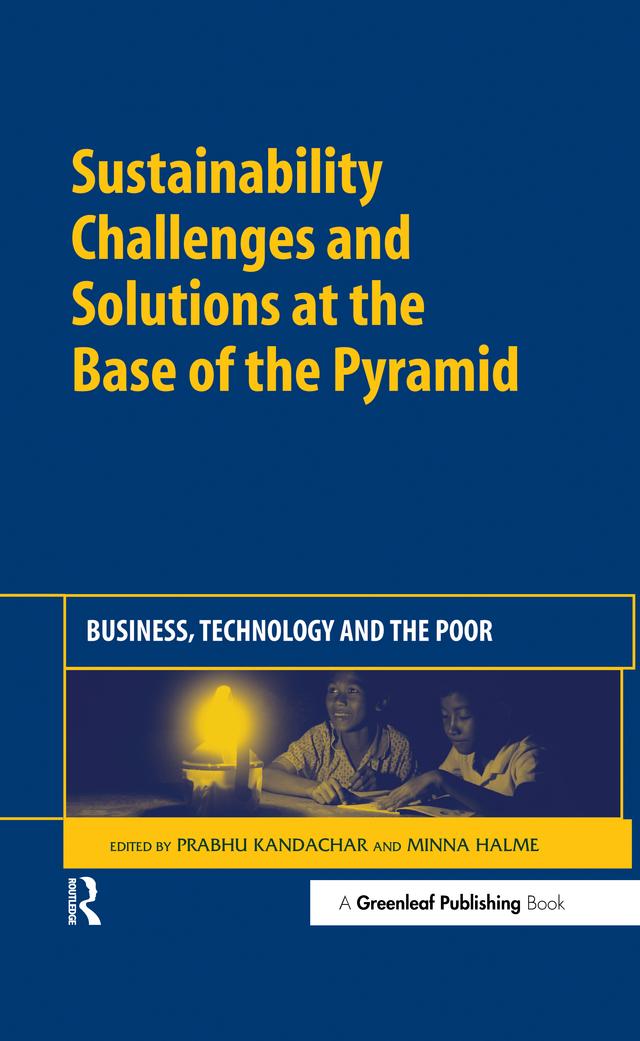
Around the turn of the millennium it had become painfully evident that development aid, charity or "global business-as-usual" were not going to be the mechanisms to alleviate global poverty. Today, there is little dispute that poverty remains the most pressing global problem calling for innovative solutions. One recent strategy is the Base of the Pyramid (BoP) concept developed by Prahalad and Hart, which relies on entrepreneurial activity tapping into the previously ignored markets of the economically most disadvantaged. It is a process requiring innovations in several disciplines: technological, social and business.This book covers a number of areas. First, much of the current BoP discussion emphasises targeting products to the needs of the poor. But do we actually know what the real needs of the poor are?
This book takes a bottom-up human-centred approach and examines examples that truly engage the poor in BoP product and service development. What types of needs assessment methodologies are indicated considering the cultural differences in BoP countries? Are the existing methodologies adequate? Do they need to be redefined and redeveloped?
Second, the book considers how we can balance poverty alleviation and stimulate economic growth without stressing the ecosystem. Tragically, the poor are hardest hit by the adverse effects of environmental deterioration such as water shortages, climate change or the destruction of habitats. While the economic welfare of the poor is critical, the BoP approach must balance its inherent paradox of encouraging greater consumption while avoiding further pressures on environmental sustainability. The link between the BoP approach and sustainable development is a key feature of this book.
Third, it looks at innovation and asks what kinds of"bottom-up" innovation (open source, technological, social and business) support BoP initiatives (and sustainable development)?Fourth, the book deals with the relationship between development assistance and BoP. Is a BoP strategy the antithesis to development aid or can these two co-exist or even complement each other?Finally, the book raises questions about the relationship between corporate responsibility and BoP. Is BoP a new form of corporate neo-colonialism or a new form of corporate responsibility?
Although the BoP concept has unleashed an extensive and generally enthusiastic response from academics, businesses, NGOs and governments, the knowledge domain around this concept is still in the early stages of development. This book addresses that need with a focus on the needs of the end-users – the poor – as a starting point for BoP products and innovations. With contributions from both supporters and critics, it provides a treasure trove of global knowledge on how the concept has developed, what its successes and failures have been and what promise it holds as a long-term strategy for alleviating poverty and tackling global sustainability.
Pay easily by card, Klarna, Apple Pay or Google Pay. Not happy? You always have a 14-day money-back guarantee. Read more in our terms. If you have any questions, email us at hello@memmo.org.
Memmo makes studying easier – wherever you are in the world. We bring your course books and smart study tools together in one place: summaries, quizzes, podcasts and flashcards. Plus Ted, your study buddy who answers anything you wonder. Over 50,000 students already study here – built to help you learn faster and stress less.