
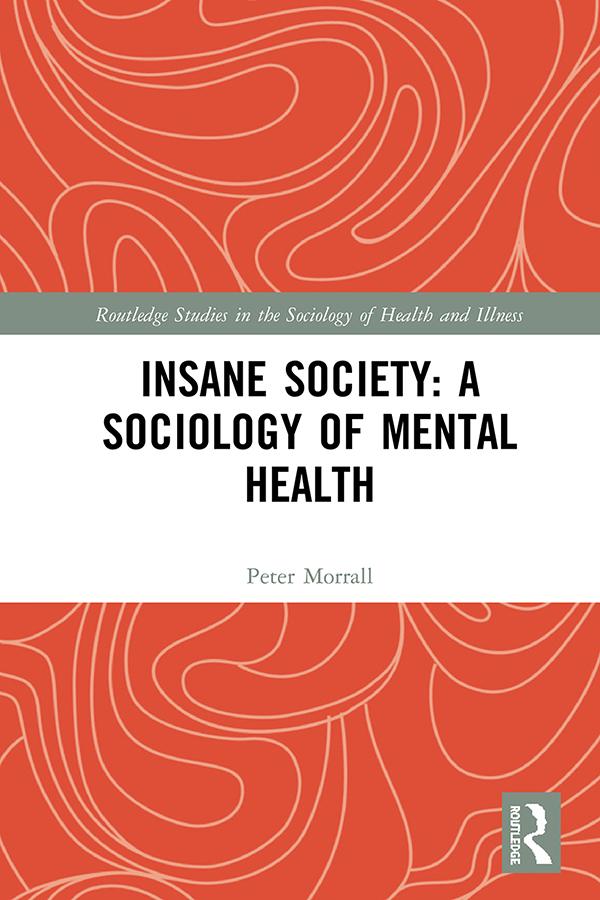
This book critiques the connection between Western society and madness, scrutinizing if and how societal insanity affects the cause, construction, and consequence of madness.
Looking beyond the affected individual to their social, political, economic, ecological, and cultural context, this book examines whether society itself, and its institutions, divisions, practices, and values, is mad. That society’s insanity is relevant to the sanity and insanity of its citizens has been argued by Fromm in The Sane Society, but also by a host of sociologists, social thinkers, epidemiologists and biologists. This book builds on classic texts such as Foucault’s History of Madness, Scull’s Marxist-oriented works and more recent publications which have arisen from a range of socio-political and patient-orientated movements. Chapters in this book draw on biology, psychology, sociological and anthropological thinking that argues that where madness is concerned, society matters.
Providing an extended case study of how the sociological imagination should operate in a contemporary setting, this book draws on genetics, neuroscience, cognitive science, radical psychology, and evolutionary psychology/psychiatry. It is an important read for students and scholars of sociology, anthropology, social policy, criminology, health, and mental health.
Pay easily by card, Klarna, Apple Pay or Google Pay. Not happy? You always have a 14-day money-back guarantee. Read more in our terms. If you have any questions, email us at hello@memmo.org.
Memmo makes studying easier – wherever you are in the world. We bring your course books and smart study tools together in one place: summaries, quizzes, podcasts and flashcards. Plus Ted, your study buddy who answers anything you wonder. Over 50,000 students already study here – built to help you learn faster and stress less.