
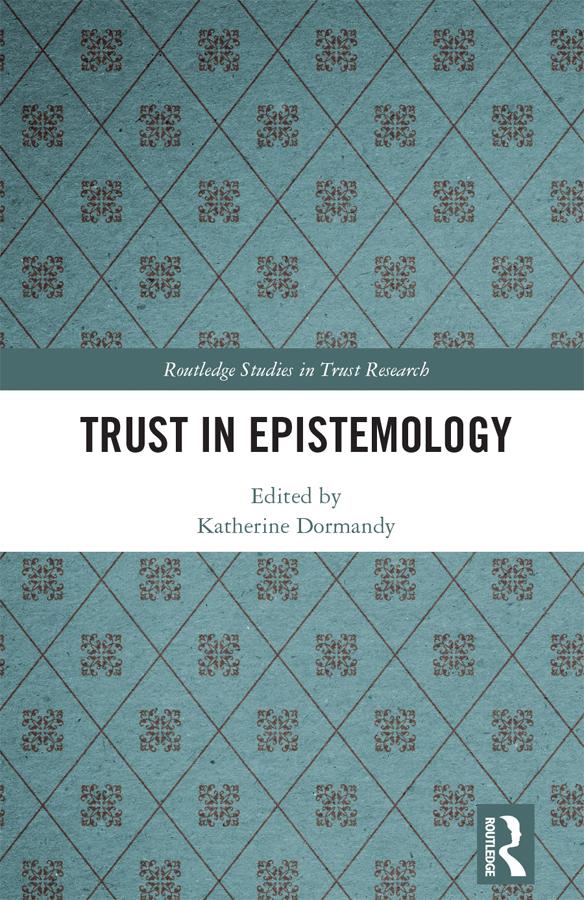
Trust is fundamental to epistemology. It features as theoretical bedrock in a broad cross-section of areas including social epistemology, the epistemology of self-trust, feminist epistemology, and the philosophy of science. Yet epistemology has seen little systematic conversation with the rich literature on trust itself. This volume aims to promote and shape this conversation. It encourages epistemologists of all stripes to dig deeper into the fundamental epistemic roles played by trust, and it encourages philosophers of trust to explore the epistemological upshots and applications of their theories. The contributors explore such issues as the risks and necessity of trusting others for information, the value of doing so as opposed to relying on oneself, the mechanisms underlying trust’s strange ability to deliver knowledge, whether depending on others for information is compatible with epistemic responsibility, whether self-trust is an intellectual virtue, and the intimate relationship between epistemic trust and social power.
This volume, in Routledge’s new series on trust research, will be a vital resource to academics and students not just of epistemology and trust, but also of moral psychology, political philosophy, the philosophy of science, and feminist philosophy – and to anyone else wanting to understand our vital yet vulnerable-making capacity to trust others and ourselves for information in a complex world.
Pay easily by card, Klarna, Apple Pay or Google Pay. Not happy? You always have a 14-day money-back guarantee. Read more in our terms. If you have any questions, email us at hello@memmo.org.
Memmo makes studying easier – wherever you are in the world. We bring your course books and smart study tools together in one place: summaries, quizzes, podcasts and flashcards. Plus Ted, your study buddy who answers anything you wonder. Over 50,000 students already study here – built to help you learn faster and stress less.