
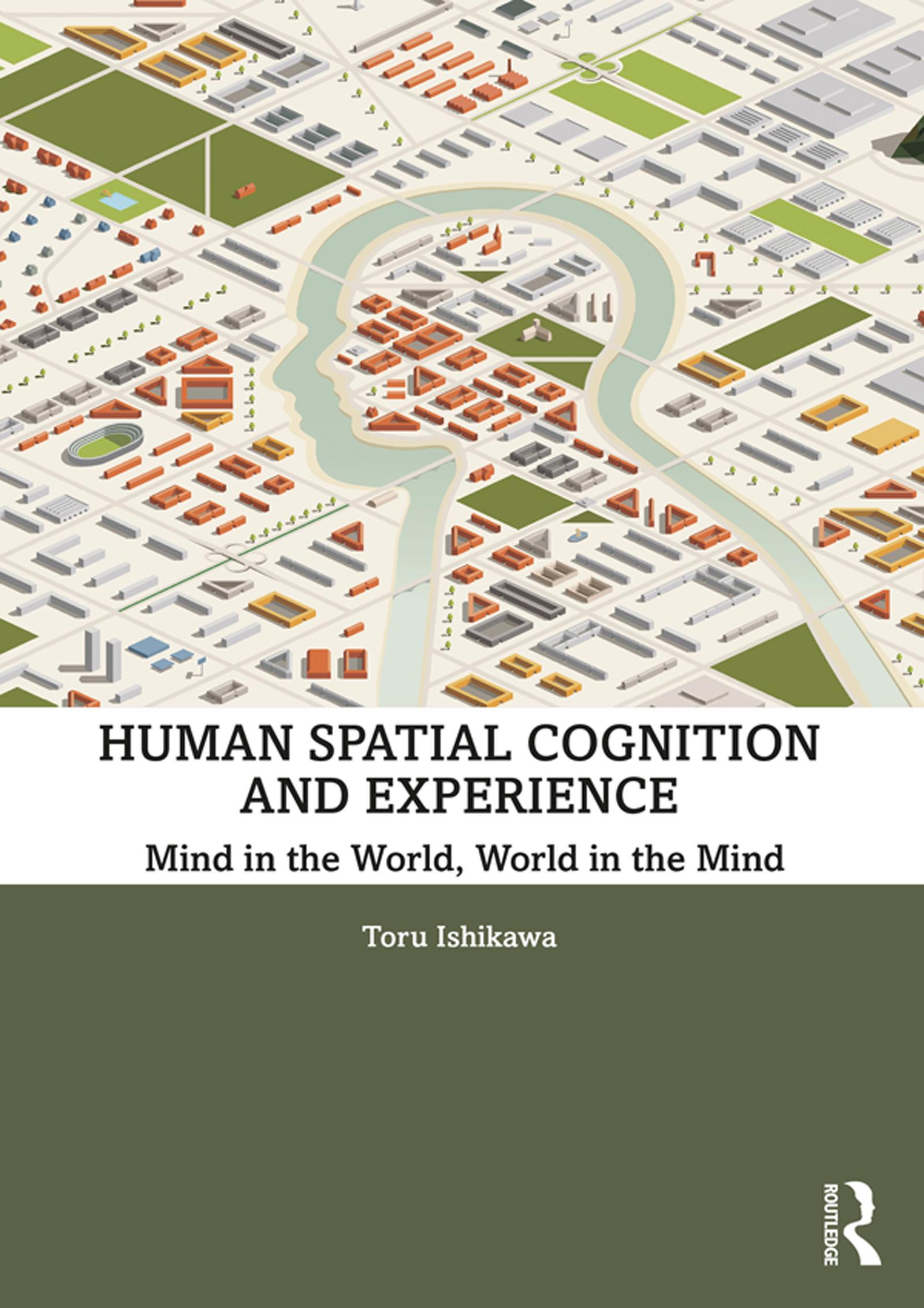
This book offers students an introduction to human spatial cognition and experience and is designed for graduate and advanced undergraduate students who are interested in the study of maps in the head and the psychology of space.
We live in space and space surrounds us. We interact with space all the time, consciously or unconsciously, and make decisions and actions based on our perceptions of that space. Have you ever wondered how some people navigate perfectly using maps in their heads while other people get lost even with a physical map? What do you mean when you say you have a poor "sense of direction"? How do we know where we are? How do we use and represent information about space?
This book clarifies that our knowledge and feelings emerge as a consequence of our interactions with the surrounding space, and show that the knowledge and feelings direct, guide, or limit our spatial behavior and experience. Space matters, or more specifically space we perceive matters. Research into spatial cognition and experience, asking fundamental questions about how and why space and spatiality matters to humans, has thus attracted attention. It is no coincidence that the 2014 Nobel Prize in Physiology or Medicine was awarded for research into a positioning system in the brain or "inner GPS" and that spatial information and technology are recognized as an important social infrastructure in recent years.
This is the first book aimed at graduate and advanced undergraduate students pursuing this fascinating area of research. The content introduces the reader to the field of spatial cognition and experience with a series of chapters covering theoretical, empirical, and practical issues, including cognitive maps, spatial orientation, spatial ability and thinking, geospatial information, navigation assistance, and environmental aesthetics.
Pay easily by card, Klarna, Apple Pay or Google Pay. Not happy? You always have a 14-day money-back guarantee. Read more in our terms. If you have any questions, email us at hello@memmo.org.
Memmo makes studying easier – wherever you are in the world. We bring your course books and smart study tools together in one place: summaries, quizzes, podcasts and flashcards. Plus Ted, your study buddy who answers anything you wonder. Over 50,000 students already study here – built to help you learn faster and stress less.