
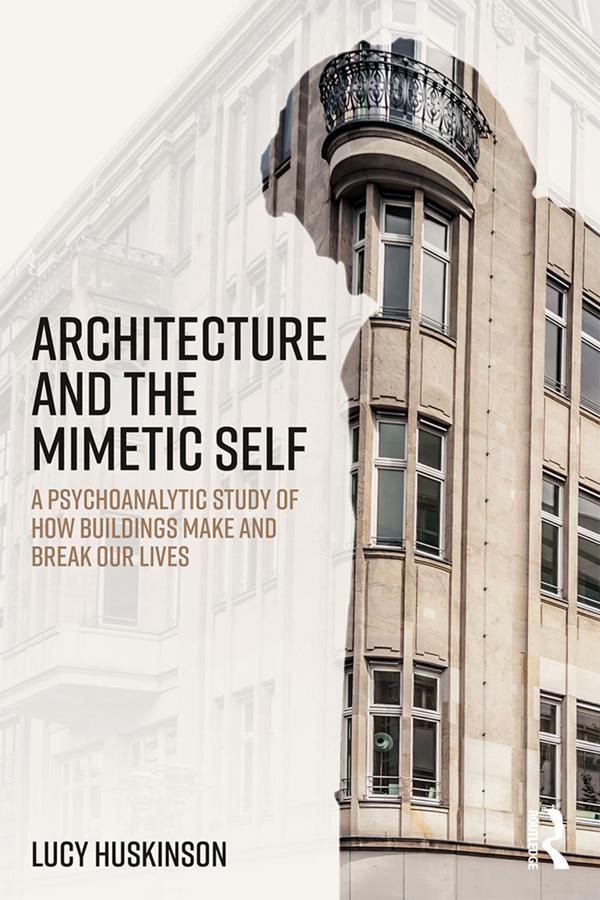
Buildings shape our identity and sense of self in profound ways that are not always evident to architects and town planners, or even to those who think they are intimately familiar with the buildings they inhabit. Architecture and the Mimetic Self provides a useful theoretical guide to our unconscious behaviour in relation to buildings, and explains both how and why we are drawn to specific elements and features of architectural design. It reveals how even the most uninspiring of buildings can be modified to meet our unconscious expectations and requirements of them—and, by the same token, it explores the repercussions for our wellbeing when buildings fail to do so.
Criteria for effective architectural design have for a long time been grounded in utilitarian and aesthetic principles of function, efficiency, cost, and visual impact. Although these are important considerations, they often fail to meet the fundamental needs of those who inhabit and use buildings. Misconceptions are rife, not least because our responses to architecture are often difficult to measure, and are in large part unconscious. By bridging psychoanalytic thought and architectural theory, Architecture and the Mimetic Self frees the former from its preoccupations with interpersonal human relations to address the vital relationships that we establish with our nonhuman environments.
In addition to providing a guide to the unconscious behaviours that are most relevant for evaluating architectural design, this book explains how our relationships with the built environment inform a more expansive and useful psychoanalytic theory of human relationship and identity. It will appeal to psychoanalysts and analytical psychologists, architects, and all who are interested in the overlaps of psychology, architecture, and the built environment.
Pay easily by card, Klarna, Apple Pay or Google Pay. Not happy? You always have a 14-day money-back guarantee. Read more in our terms. If you have any questions, email us at hello@memmo.org.
Memmo makes studying easier – wherever you are in the world. We bring your course books and smart study tools together in one place: summaries, quizzes, podcasts and flashcards. Plus Ted, your study buddy who answers anything you wonder. Over 75,000 students already study here – built to help you learn faster and stress less.