
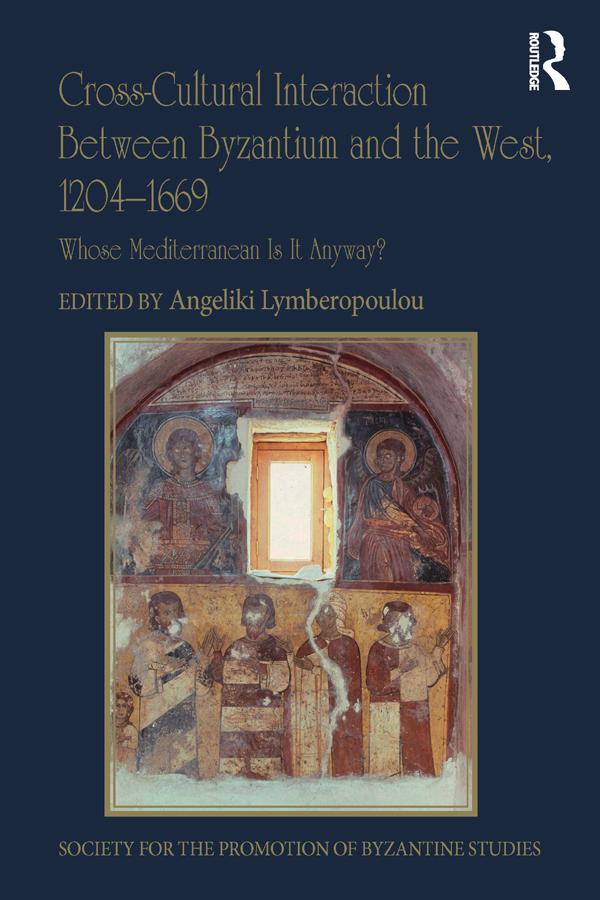
The early modern Mediterranean was an area where many different rich cultural traditions came in contact with each other, and were often forced to co-exist, frequently learning to reap the benefits of co-operation. Orthodox, Roman Catholics, Muslims, Jews, and their interactions all contributed significantly to the cultural development of modern Europe. The aim of this volume is to address, explore, re-examine and re-interpret one specific aspect of this cross-cultural interaction in the Mediterranean – that between the Byzantine East and the (mainly Italian) West. The investigation of this interaction has become increasingly popular in the past few decades, not least due to the relevance it has for cultural exchanges in our present-day society.
The starting point is provided by the fall of Constantinople to the troops of the Fourth Crusade in 1204. In the aftermath of the fall, a number of Byzantine territories came under prolonged Latin occupation, an occupation that forced Greeks and Latins to adapt their life socially and religiously to the new status quo. Venetian Crete developed one of the most fertile ‘bi-cultural’ societies, which evolved over 458 years. Its fall to the Ottoman Turks in 1669 marked the end of an era and was hence chosen as the end point for the conference. By sampling case studies from the most representative areas where this interaction took place, the volume highlights the process as well as the significance of its cultural development.
Pay easily by card, Klarna, Apple Pay or Google Pay. Not happy? You always have a 14-day money-back guarantee. Read more in our terms. If you have any questions, email us at hello@memmo.org.
Memmo makes studying easier – wherever you are in the world. We bring your course books and smart study tools together in one place: summaries, quizzes, podcasts and flashcards. Plus Ted, your study buddy who answers anything you wonder. Over 50,000 students already study here – built to help you learn faster and stress less.