
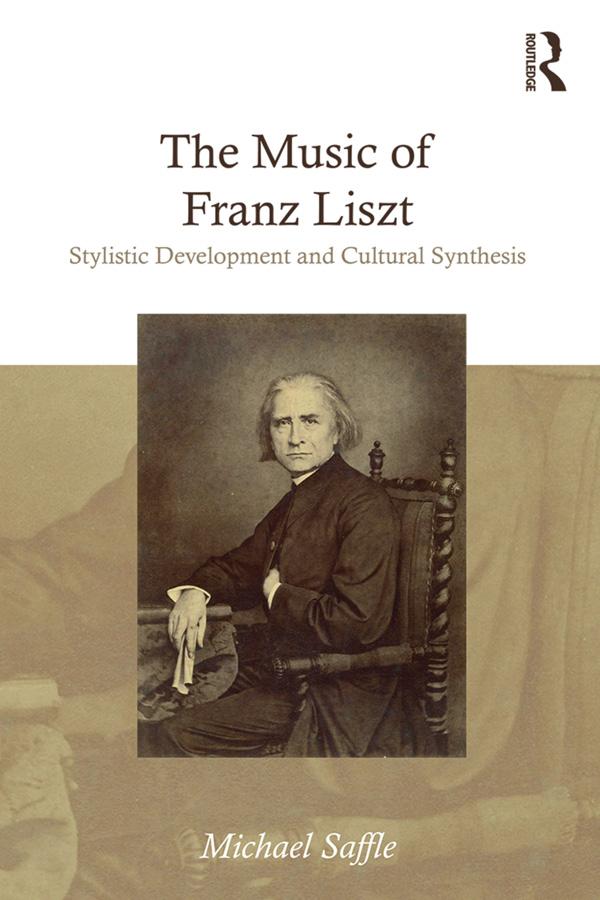
Much of Franz Liszt's musical legacy has often been dismissed as 'trivial’ or 'merely showy,' more or less peripheral contributions to nineteenth-century European culture. But Liszt was a mainstream composer in ways most of his critics have failed to acknowledge; he was also an incessant and often extremely successful innovator. Liszt's mastery of fantasy and sonata traditions, his painstaking settings of texts ranging from erotic verse to portions of the Catholic liturgy, and the remarkable self-awareness he demonstrated even in many of his most 'entertaining' pieces: all these things stamp him not only as a master of Romanticism and an early Impressionist, but as a precursor of Postmodern 'pop.' Liszt's Music places Liszt in historical and cultural focus. At the same time, it examines his principal contributions to musical literature -- from his earliest operatic paraphrases to his final explorations of harmonic and formal possibilities. Liszt's compositional methods, including his penchant for revision, problems associated with early editions of some of his works, and certain aspects of class and gender issues are also discussed. The first book-length assessment of Liszt as composer since Humphrey Searle’s 1956 volume, Liszt's Music is illustrated with well over 100 musical examples.
Pay easily by card, Klarna, Apple Pay or Google Pay. Not happy? You always have a 14-day money-back guarantee. Read more in our terms. If you have any questions, email us at hello@memmo.org.
Memmo makes studying easier – wherever you are in the world. We bring your course books and smart study tools together in one place: summaries, quizzes, podcasts and flashcards. Plus Ted, your study buddy who answers anything you wonder. Over 50,000 students already study here – built to help you learn faster and stress less.