
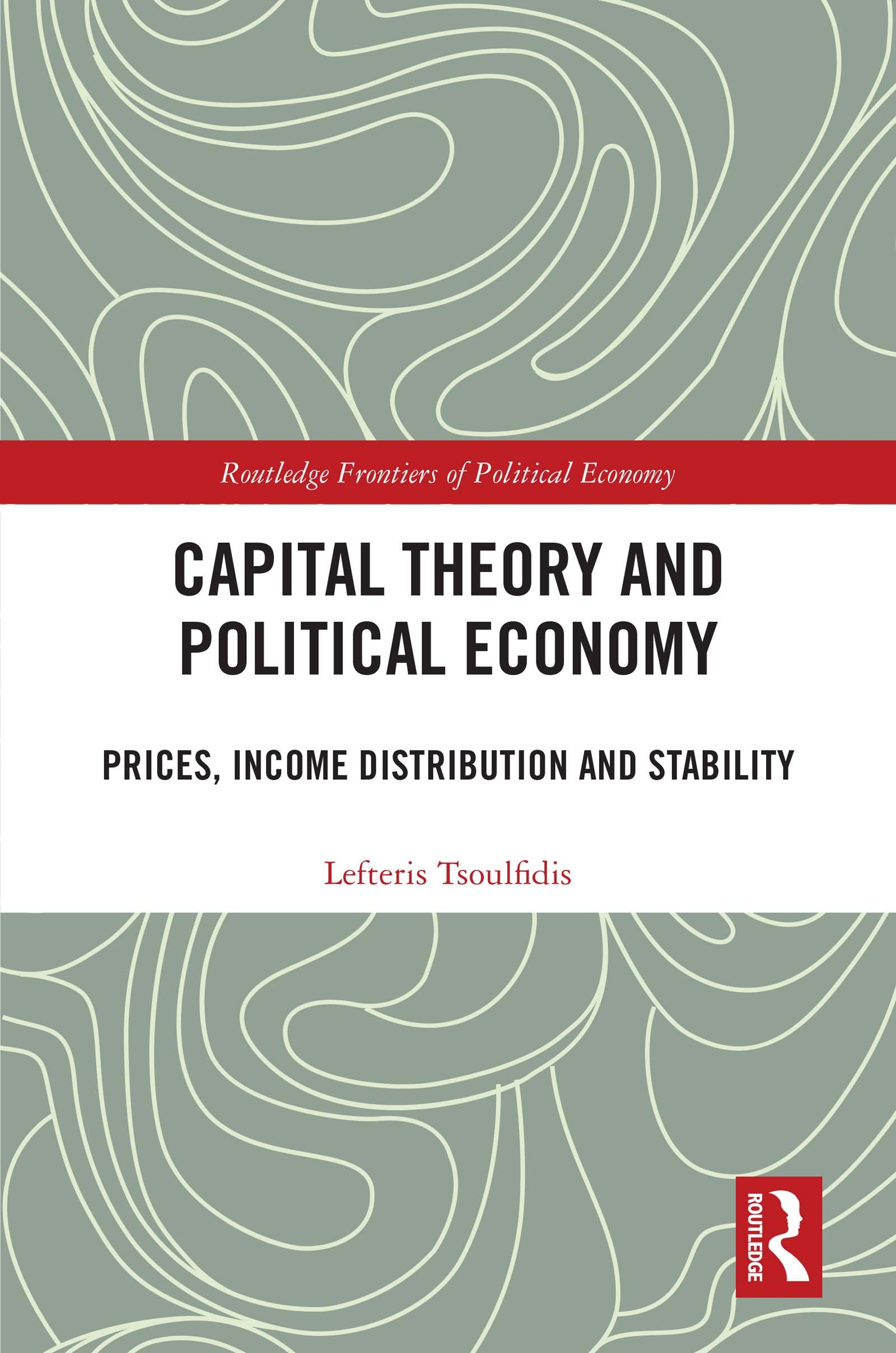
In recent years, there have been a number of new developments in what came to be known as the "Capital Theory Debates". The debates took place mainly during the 1960s as a result of Piero Sraffa's critique of the neoclassical theory according to which the prices of factors of production directly depend on their relative scarcities. Sraffa showed that when income distribution changes, there are many complexities developed within the economic system impacting on prices in ways which are not possible to predict. These debates were revisited in the 1980s and again more recently, along with a parallel literature that has developed among neoclassical economists and has also looked at the impact of shocks on an economy.
This book summarizes the debates and issues around the theory of capital and brings to the fore the more recent developments. It also pinpoints the similarities and differences between the various approaches and critically evaluates them in light of available empirical evidence. The focus of the book is on the price trajectories induced by changes in income distribution and the resulting shape of the wage rates of profit curves and frontier. These issues are central to areas such as microeconomics, international trade, growth, technological change and macro stability analysis. Each chapter starts with the theoretical issues involved, followed by their formalization and subsequently with their operationalization. More specifically, the variables of the classical theory of value and distribution are rigorously defined and quantified using actual input–output data from a number of major economies, but mainly from the USA, over long stretches of time. The empirical results are not only consistent with the anticipations of the theory but also further inform and therefore strengthen its predictive content raising new significant questions.
Pay easily by card, Klarna, Apple Pay or Google Pay. Not happy? You always have a 14-day money-back guarantee. Read more in our terms. If you have any questions, email us at hello@memmo.org.
Memmo makes studying easier – wherever you are in the world. We bring your course books and smart study tools together in one place: summaries, quizzes, podcasts and flashcards. Plus Ted, your study buddy who answers anything you wonder. Over 50,000 students already study here – built to help you learn faster and stress less.