
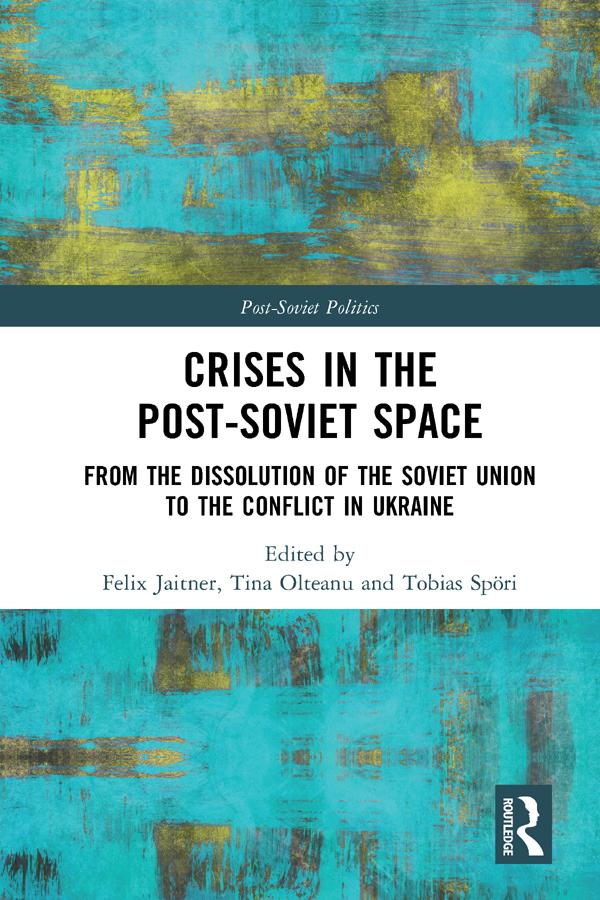
The breakup of the Soviet Union led to the creation of new states and territorial conflicts of different levels of intensity. Scrutinising the post‐Soviet period, this volume offers explanations for both the frequency and the intensity of crises in the region.
This book argues that the societies which emerged in the post-Soviet space share characteristic features, and that the instability and conflict-prone nature of the Soviet Union’s successor states can be explained by analysing the post-independence history of the region and linking it to the emergence of overlapping economic, political and violent crises (called 'Intersecting Crises Phenomena’). Transformation itself is shown to be a decisive process and, while acknowledging specific national and regional characteristics and differences, the authors demonstrate its shared impact. This comparison across countries and over time presents patterns of crisis and crisis management common to all the successor states. It disentangles the process, highlighting the multifaceted features of post-Soviet crises and draws upon the concept of crisis to determine the tipping points of post-Soviet development.
Especially useful for scholars and students dealing with the Soviet successor states, this book should also prove interesting to those researching in the fields of communist and post‐communist Studies, Eurasian politics, international relations and peace and conflict studies.
Pay easily by card, Klarna, Apple Pay or Google Pay. Not happy? You always have a 14-day money-back guarantee. Read more in our terms. If you have any questions, email us at hello@memmo.org.
Memmo makes studying easier – wherever you are in the world. We bring your course books and smart study tools together in one place: summaries, quizzes, podcasts and flashcards. Plus Ted, your study buddy who answers anything you wonder. Over 50,000 students already study here – built to help you learn faster and stress less.