
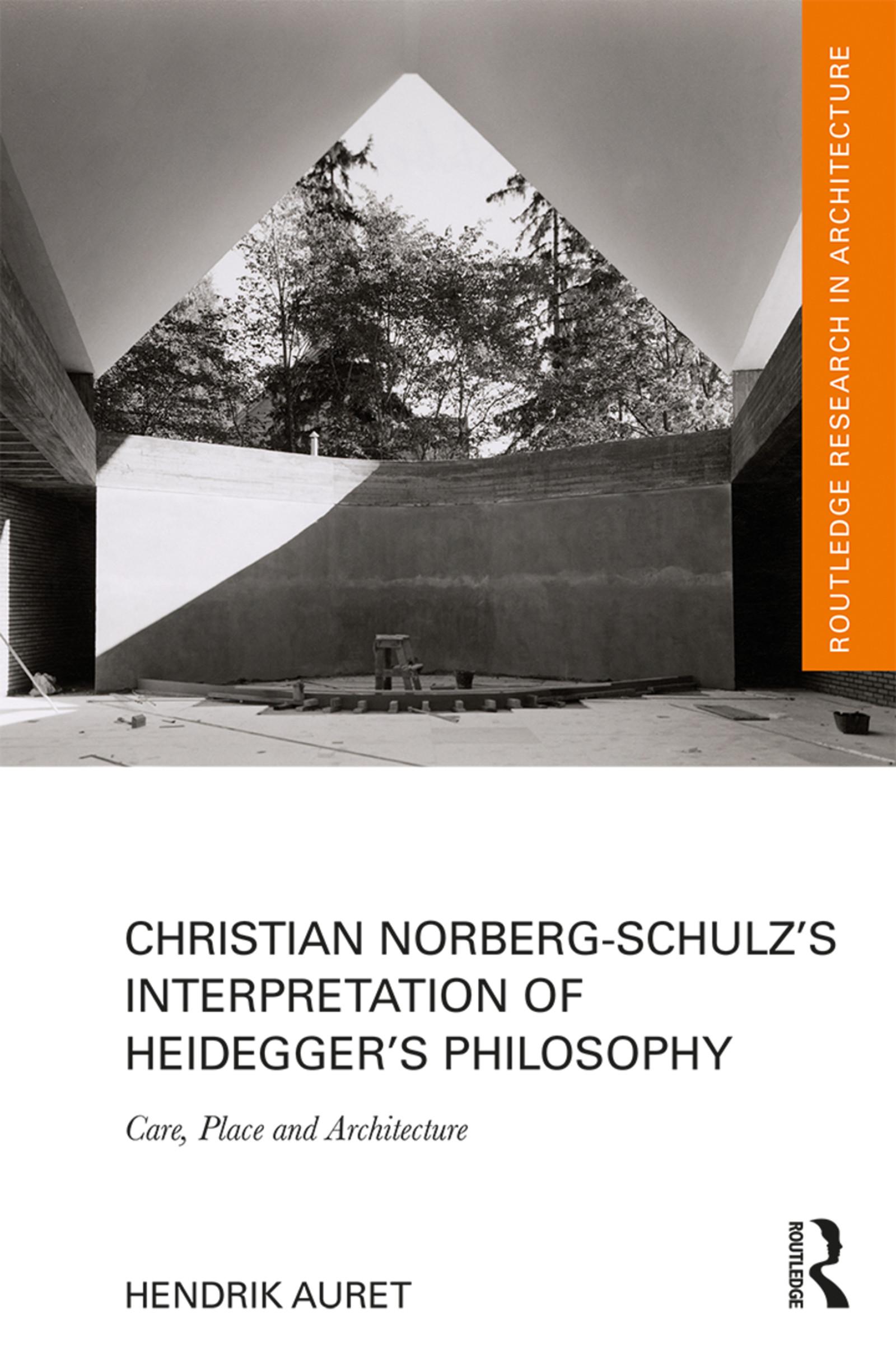
Christian Norberg-Schulz’s Interpretation of Heidegger’s Philosophy investigates the theoretical contribution of the world-renowned Norwegian architectural theorist Christian Norberg-Schulz (1926 – 2000) and considers his architectural interpretation of the writings of German philosopher Martin Heidegger. Though widely recognised as providing the most comprehensive reading of Heideggerian philosophy through the lens of architecture, this book argues that Norberg-Schulz neglected one of the key aspects of the philosopher’s contributions: the temporal nature of being-in-the-world as care. The undeveloped architectural implications of the ontological concept of care in his work prevented the fruition of his ultimate aim, transforming the ‘art of place’ into an ‘art of living’.
This book seeks to realign Norberg-Schulz’s understanding of time as continuity and change to present a holistic approach grounded in Heidegger’s phenomenological philosophy; architecture as art of care. Aimed at academics and scholars in architectural theory, history and philosophy, Christian Norberg-Schulz’s Interpretation of Heidegger’s Philosophy surveys the implications and significance of the theorist’s works on architectural criticism in the late 20th century.
Pay easily by card, Klarna, Apple Pay or Google Pay. Not happy? You always have a 14-day money-back guarantee. Read more in our terms. If you have any questions, email us at hello@memmo.org.
Memmo makes studying easier – wherever you are in the world. We bring your course books and smart study tools together in one place: summaries, quizzes, podcasts and flashcards. Plus Ted, your study buddy who answers anything you wonder. Over 75,000 students already study here – built to help you learn faster and stress less.