
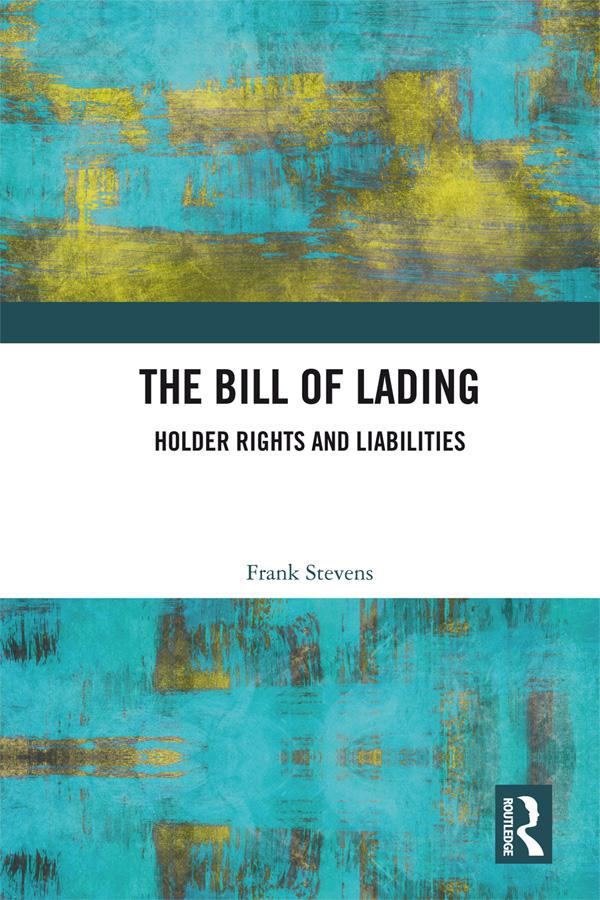
The carriage of goods by sea starts off with a contract of carriage, an essentially simple and straightforward contract between two parties, the shipper and the carrier. Very often, however, a bill of lading is issued and a third party appears on the scene: the holder of the bill of lading. The holder was not involved in the making of the contract of carriage, but does have rights, and possibly obligations, against the carrier at destination. The question then is how the third-party holder of the bill acquires those rights and obligations.
Analysing the different theories that have been proposed to explain the position of the third party holder, this book makes a distinction between contractual theories and non-contractual theories to explain the holder's position. Contractual theories build on the initial contract of carriage and apply contract law mechanisms while non-contractual theories construe the position of the third-party holder independently.
Following the analysis and appraisal of the different theories, this book makes the case that the position of the third-party holder of the bill of lading is not obvious or self-evident; and submits that a statutory approach to the position of the holder of the bill of lading has advantages and would be preferable.
Pay easily by card, Klarna, Apple Pay or Google Pay. Not happy? You always have a 14-day money-back guarantee. Read more in our terms. If you have any questions, email us at hello@memmo.org.
Memmo makes studying easier – wherever you are in the world. We bring your course books and smart study tools together in one place: summaries, quizzes, podcasts and flashcards. Plus Ted, your study buddy who answers anything you wonder. Over 50,000 students already study here – built to help you learn faster and stress less.