
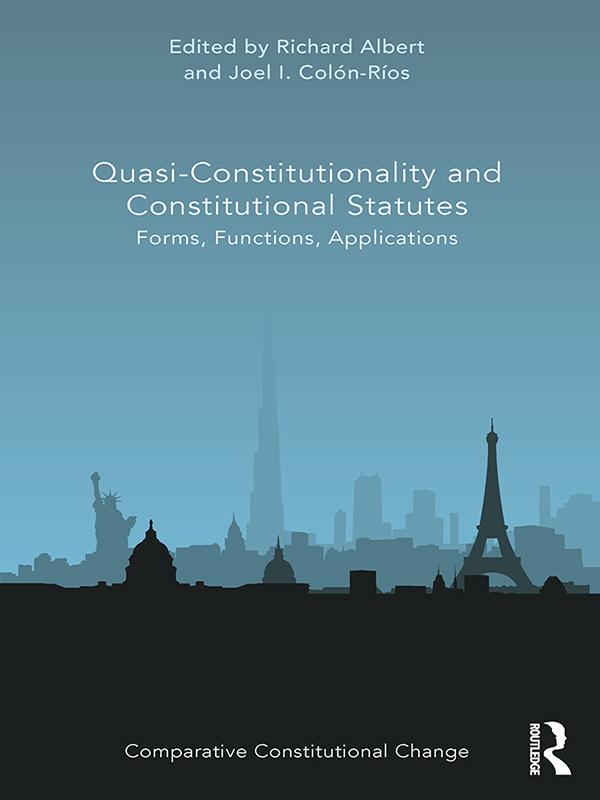
This book examines the interstices among statutory enactment, constitutional convention and formal constitution in which quasi-constitutionality exists. It provides a focal resource that can serve as a point of reference for scholars interested in quasi-constitutionality as a whole, from national and transnational perspectives, expanding on its many forms, functions, and applications with recourse to comparative insights. The book is divided in three main Parts, each of them preceded by a separate critical introduction in which an informed scholar contextualizes the chapters and offers reflections on the themes they develop. The first Part, titled 'Forms', is composed of chapters that address, from a theoretical and comparative perspective, questions related to the recognition of constitutional statutes and quasi-constitutional legislation. The second Part is titled 'Functions', and contains chapters that explore the explanatory power of quasi-constitutionality in different institutional contexts. The third Part, titled 'Applications', considers the ways in which constitutional statutes and quasi-constitutionality operate in relation to particular tensions and debates present in various jurisdictions.
Pay easily by card, Klarna, Apple Pay or Google Pay. Not happy? You always have a 14-day money-back guarantee. Read more in our terms. If you have any questions, email us at hello@memmo.org.
Memmo makes studying easier – wherever you are in the world. We bring your course books and smart study tools together in one place: summaries, quizzes, podcasts and flashcards. Plus Ted, your study buddy who answers anything you wonder. Over 50,000 students already study here – built to help you learn faster and stress less.