
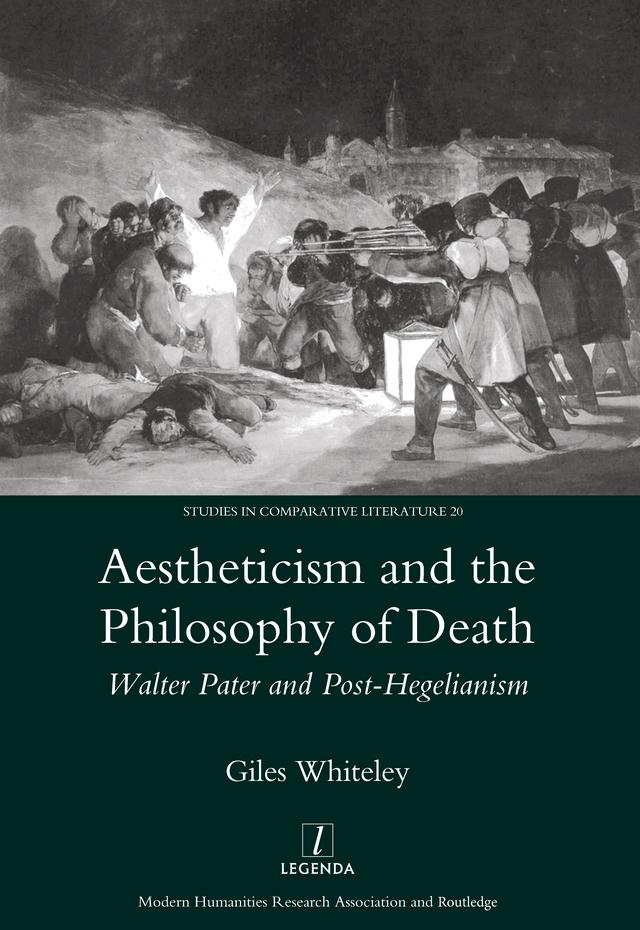
"Walter Pater, best known as the author of The Renaissance (1873) and as Oscar Wildes tutor and friend, was a leading figure in European aestheticism and British fin-de-siecle culture. Despite this, he has received only limited critical attention, and has tended to be read conservatively. Drawing on Paters unpublished manuscripts, Giles Whiteley challenges this view of Pater as a closeted don who spend the remainder of his life regretting the excesses of his Renaissance. Focusing on Paters reading of the German idealist philosopher, G. W. F. Hegel, Whiteley argues that Paters response to both the philosophical and the ideological legacies of idealism was significantly more advanced than has been hitherto thought. Presenting a persuasive new reading of the genre of the imaginary portrait Paters most elusive form of writing the book paints a picture of Walter Pater as a truly revolutionary thinker. Pater, like Nietzsche during the same period, breaks with the dialectic as a method. Anticipating the radical critiques of ideology of post- Hegelians such as Derrida and Deleuze, Pater becomes a radical and transgressive thinker in his own right."
Pay easily by card, Klarna, Apple Pay or Google Pay. Not happy? You always have a 14-day money-back guarantee. Read more in our terms. If you have any questions, email us at hello@memmo.org.
Memmo makes studying easier – wherever you are in the world. We bring your course books and smart study tools together in one place: summaries, quizzes, podcasts and flashcards. Plus Ted, your study buddy who answers anything you wonder. Over 50,000 students already study here – built to help you learn faster and stress less.
You might also like
Buy the book0