
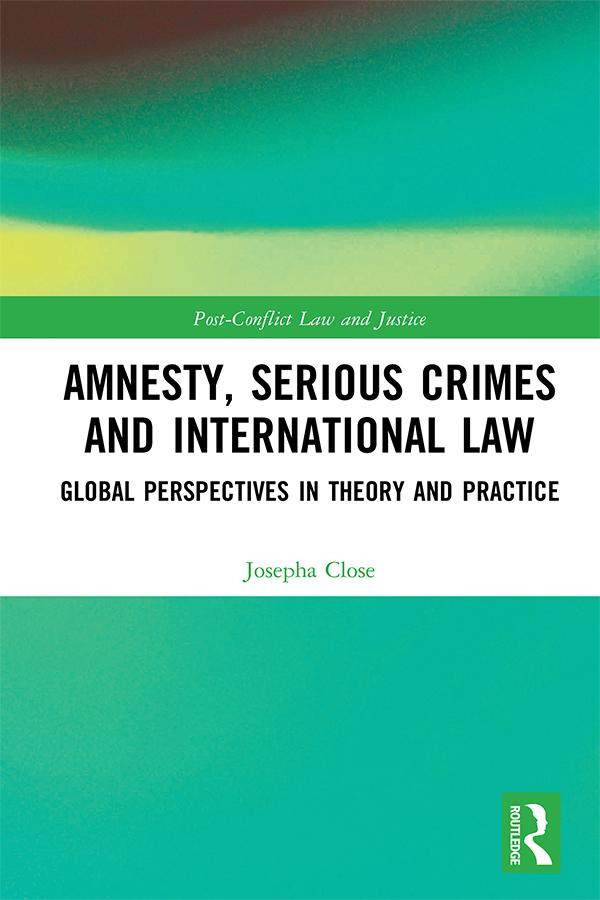
Amnesty, Serious Crimes and International Law examines the permissibility of amnesties for serious crimes in the contemporary international order. In the last few decades, there has been a growing tendency to consider that amnesties are prohibited in respect of certain grave crimes. However, the question remains controversial as there is no explicit treaty ban and general amnesties continue to be frequently issued in post-conflict and transitional contexts. The first part of the book explores the use of amnesties from antiquity to the present day. It reviews amnesty traditions in ancient societies and provides a global picture of modern amnesties. In parallel, it traces the development of the accountability paradigm underpinning the current prohibitive stance on amnesties. The second part assesses the position of modern international law on amnesties. It comprehensively analyses the main arguments supporting the existence of a general amnesty ban, including the duty to prosecute international crimes, the right to redress of victims of human rights violations, international standards and trends in state practice, and the mandate of international criminal courts. The book argues that, while international legal or policy requirements restrict the freedom of states to extend amnesty in respect of serious crimes, or the effectiveness of amnesty measures in preventing the prosecution of such crimes, these restrictions do not add up to an absolute and universal prohibition.
Pay easily by card, Klarna, Apple Pay or Google Pay. Not happy? You always have a 14-day money-back guarantee. Read more in our terms. If you have any questions, email us at hello@memmo.org.
Memmo makes studying easier – wherever you are in the world. We bring your course books and smart study tools together in one place: summaries, quizzes, podcasts and flashcards. Plus Ted, your study buddy who answers anything you wonder. Over 50,000 students already study here – built to help you learn faster and stress less.