
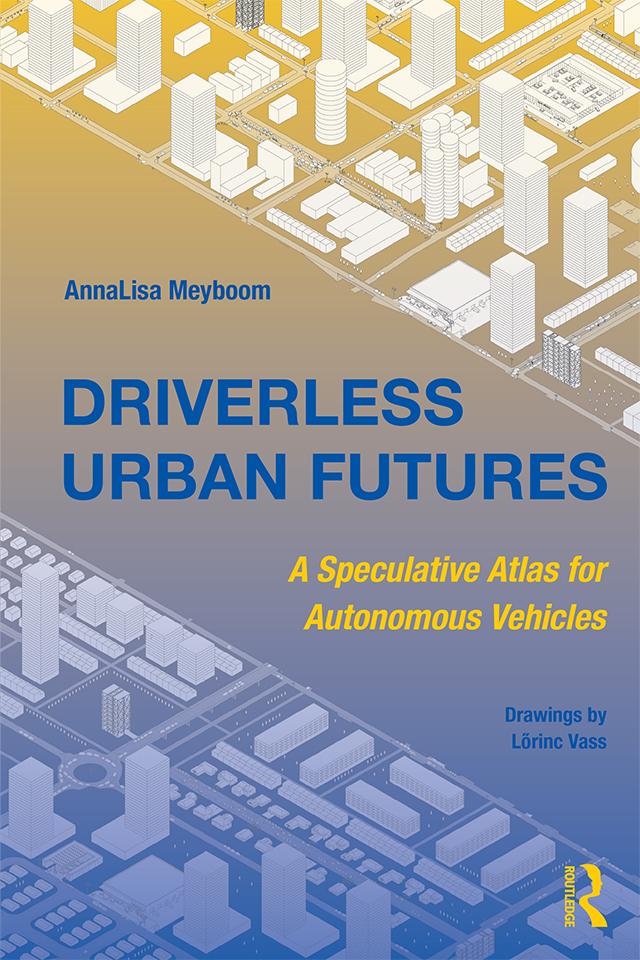
Since the industrial revolution, innovations in transportation technology have continued to re-shape the spatial organization and temporal occupation of the built environment. Today, autonomous vehicles (AVs, also referred to as self-driving cars) represent the next disruptive innovation in mobility, with particularly profound impacts for cities. At a moment of the fast-paced development of AVs by auto-making companies around the world, policymakers, planners, and designers need to anticipate and address the many questions concerning the impacts of this new technology on urbanism and society at large.
Conceived as a speculative atlas –a roadmap to unknown territories– this book presents a series of drawings and text that unpack the potential impacts of AVs on scales ranging from the metropolis to the street. The work is both grounded in a study of the history of urban transportation and current trajectories of technological innovation, and informed by an open-ended attitude of future envisioning and design. Through the drawings and essays, Driverless Urban Futures invites readers into a debate of how our future infrastructure could benefit all members of the public and levels of society.
Pay easily by card, Klarna, Apple Pay or Google Pay. Not happy? You always have a 14-day money-back guarantee. Read more in our terms. If you have any questions, email us at hello@memmo.org.
Memmo makes studying easier – wherever you are in the world. We bring your course books and smart study tools together in one place: summaries, quizzes, podcasts and flashcards. Plus Ted, your study buddy who answers anything you wonder. Over 75,000 students already study here – built to help you learn faster and stress less.