
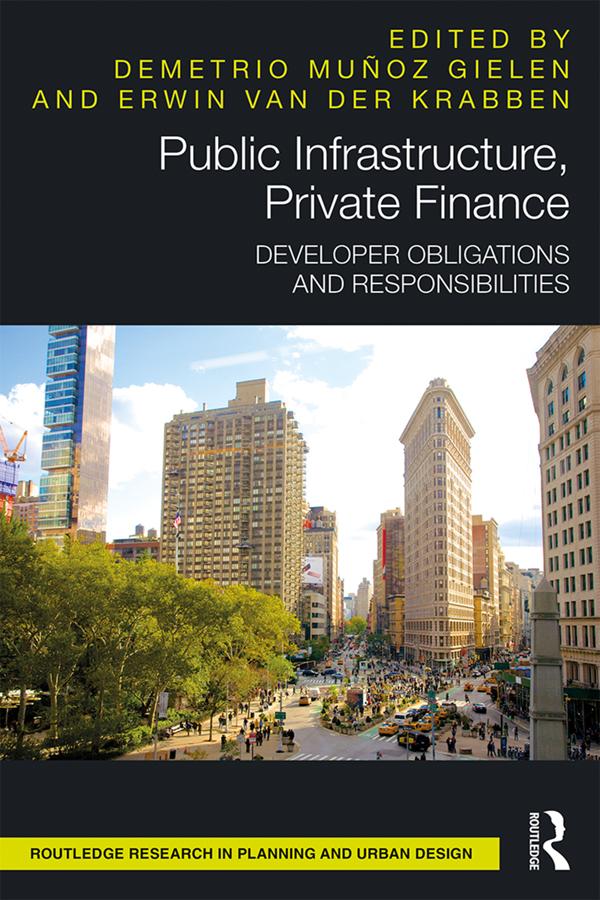
Traditionally, the public sector has been responsible for the provision of all public goods necessary to support sustainable urban development, including public infrastructure such as roads, parks, social facilities, climate mitigation and adaptation, and affordable housing. With the shift in recent years towards public infrastructure being financed by private stakeholders, the demand for transparent guidance to ensure accountability for the responsibilities held by developers has risen.
Within planning practice and urban development, the shift towards private financing of public infrastructure has translated into new tools being implemented to provide joint responsibility for upholding requirements. Developer obligations are contributions made by property developers and landowners towards public infrastructure in exchange for decisions on land-use regulations which increase the economic value of their land. This book presents insight into the design and practical results of these obligations in different countries and their effects on municipal financial health, demonstrating the increasing importance of efficient bargaining processes and the institutional design of developer obligations in modern urban planning.
Primarily written for academics in land-use planning, real estate, urban development, law, and economics, it will additionally be useful to policy makers and practitioners pursuing the improvement of public infrastructure financing.
Pay easily by card, Klarna, Apple Pay or Google Pay. Not happy? You always have a 14-day money-back guarantee. Read more in our terms. If you have any questions, email us at hello@memmo.org.
Memmo makes studying easier – wherever you are in the world. We bring your course books and smart study tools together in one place: summaries, quizzes, podcasts and flashcards. Plus Ted, your study buddy who answers anything you wonder. Over 75,000 students already study here – built to help you learn faster and stress less.