
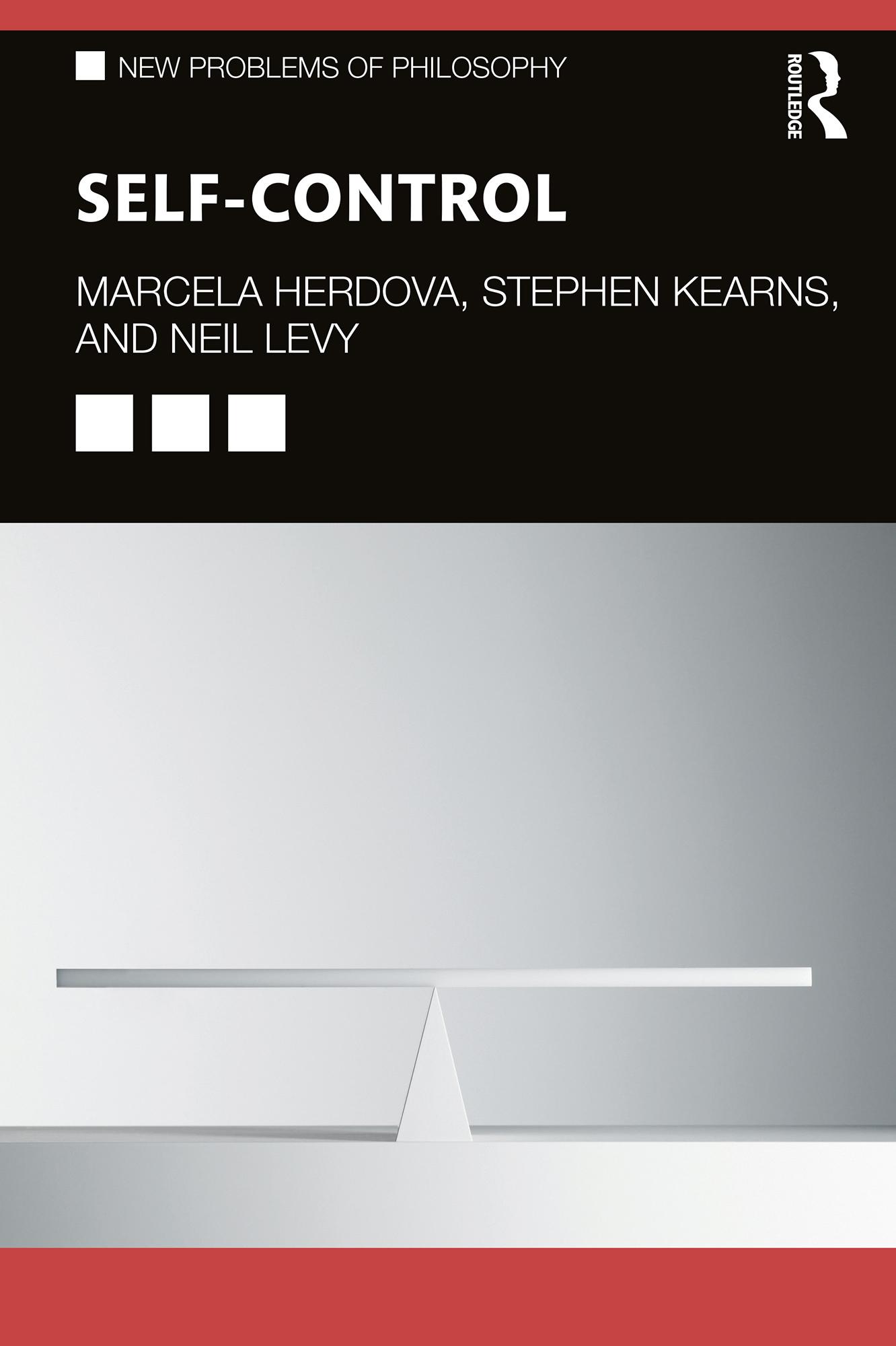
Self-control is a fundamental part of what it is to be a human being. It poses important philosophical and psychological questions about the nature of belief, motivation, judgment, and decision making. More immediately, failures of self-control can have high costs, resulting in ill-health, loss of relationships, and even violence and death, whereas strong self-control is also often associated with having a virtuous character. What exactly is self-control? If we lose control can we still be free? Can we be held responsible for loss of self-control?
In this thorough and clearly written introduction to the philosophy of self-control the authors examine and assess the following topics and questions:
- The importance of self-control
- What is self-control?
- Self-control and the law of desire
- Mechanisms of self-control
- How is it possible to lose self-control?
- Blameworthiness and (the loss of) self-control
- Externalist self-control
- Pathologies of self-control.
Combining philosophical analysis with surveys of the latest psychological research, and including chapter summaries, suggestions for further reading, and a glossary of key terms, Self-Control is essential reading for students of philosophy of mind and psychology, moral psychology, free will, and ethics. It will also be of interest to those in related fields such as psychology and cognitive science.
Pay easily by card, Klarna, Apple Pay or Google Pay. Not happy? You always have a 14-day money-back guarantee. Read more in our terms. If you have any questions, email us at hello@memmo.org.
Memmo makes studying easier – wherever you are in the world. We bring your course books and smart study tools together in one place: summaries, quizzes, podcasts and flashcards. Plus Ted, your study buddy who answers anything you wonder. Over 50,000 students already study here – built to help you learn faster and stress less.