
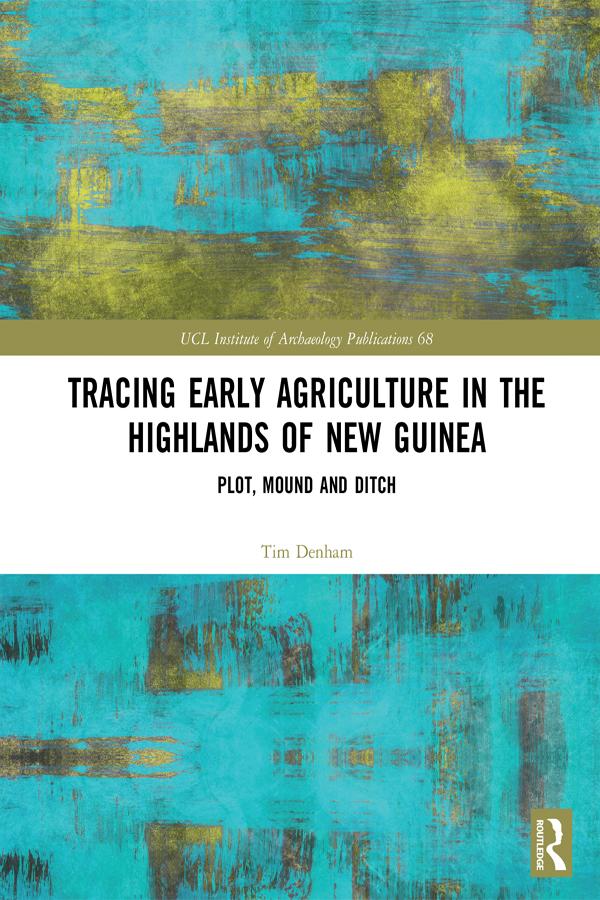
In this book, historical narratives chart how people created forms of agriculture in the highlands of New Guinea and how these practices were transformed through time. The intention is twofold: to clearly establish New Guinea as a region of early agricultural development and plant domestication; and, to develop a contingent, practice-based interpretation of early agriculture that has broader application to other regions of the world.
The multi-disciplinary record from the highlands has the potential to challenge and change long held assumptions regarding early agriculture globally, which are usually based on domestication. Early agriculture in the highlands is charted by an exposition of the practices of plant exploitation and cultivation. Practices are ontologically prior because they ultimately produce the phenotypic and genotypic changes in plant species characterised as domestication, as well as the social and environmental transformations associated with agriculture. They are also methodologically prior because they emplace plants in specific historico-geographic contexts.
Pay easily by card, Klarna, Apple Pay or Google Pay. Not happy? You always have a 14-day money-back guarantee. Read more in our terms. If you have any questions, email us at hello@memmo.org.
Memmo makes studying easier – wherever you are in the world. We bring your course books and smart study tools together in one place: summaries, quizzes, podcasts and flashcards. Plus Ted, your study buddy who answers anything you wonder. Over 75,000 students already study here – built to help you learn faster and stress less.