
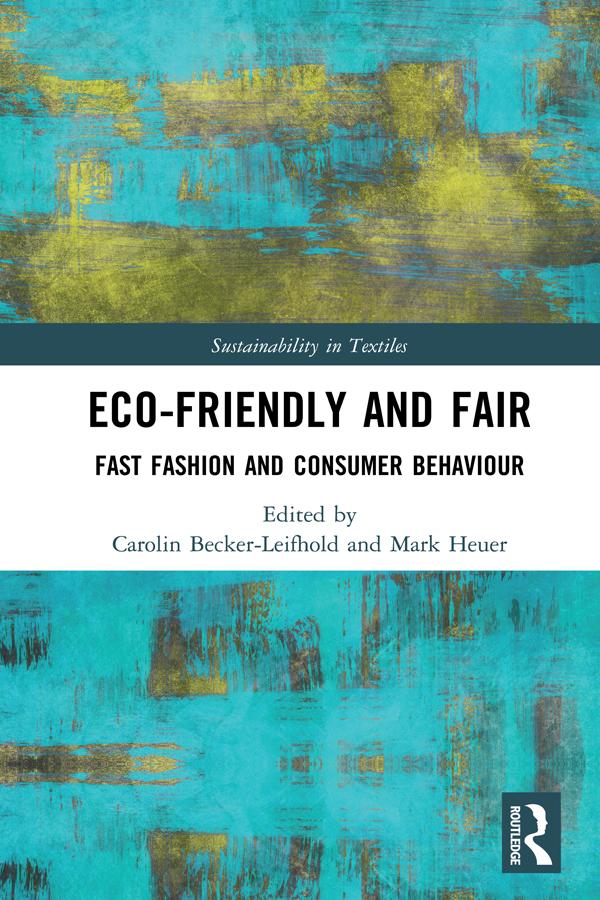
The make-take-waste paradigm of fast fashion explains much of the producer and consumer behavior patterns towards fast fashion. The evolution from a two-season fashion calendar to fast fashion, characterized by rapid product cycles from retailers and impulse buying by consumers, presents new challenges to the environment, workplace and labour practices.
This book provides a comprehensive overview of new insights into consumer behaviour mechanisms in order to shift practices toward sustainable fashion and to minimize the negative impacts of fast fashion on the environment and society. Concepts and techniques are presented that could overcome the formidable economic drivers of fast fashion and lead toward a future of sustainable fashion.
While the need for change in the fashion industry post-Rana Plaza could not be more obvious, alternative and more sustainable consumption models have been under-investigated. The paucity of such research extends to highly consumptive consumer behaviours regarding fast fashion (i.e. impulse buying and throwaways) and the related impediments these behaviours pose for sustainable fashion.
Written by leading researchers in the field of sustainable fashion and supported by the Textile Institute, this book evaluates fashion trends, what factors have led to new trends and how the factors supporting fast fashion differ from those of the past. It explores the economic drivers of fast fashion and what social, environmental and political factors should be maintained, and business approaches adopted, in order for fast fashion to be a sustainable model. In particular, it provides consumer behaviour concepts that can be utilized at the retail level to support sustainable fashion.
Pay easily by card, Klarna, Apple Pay or Google Pay. Not happy? You always have a 14-day money-back guarantee. Read more in our terms. If you have any questions, email us at hello@memmo.org.
Memmo makes studying easier – wherever you are in the world. We bring your course books and smart study tools together in one place: summaries, quizzes, podcasts and flashcards. Plus Ted, your study buddy who answers anything you wonder. Over 50,000 students already study here – built to help you learn faster and stress less.