
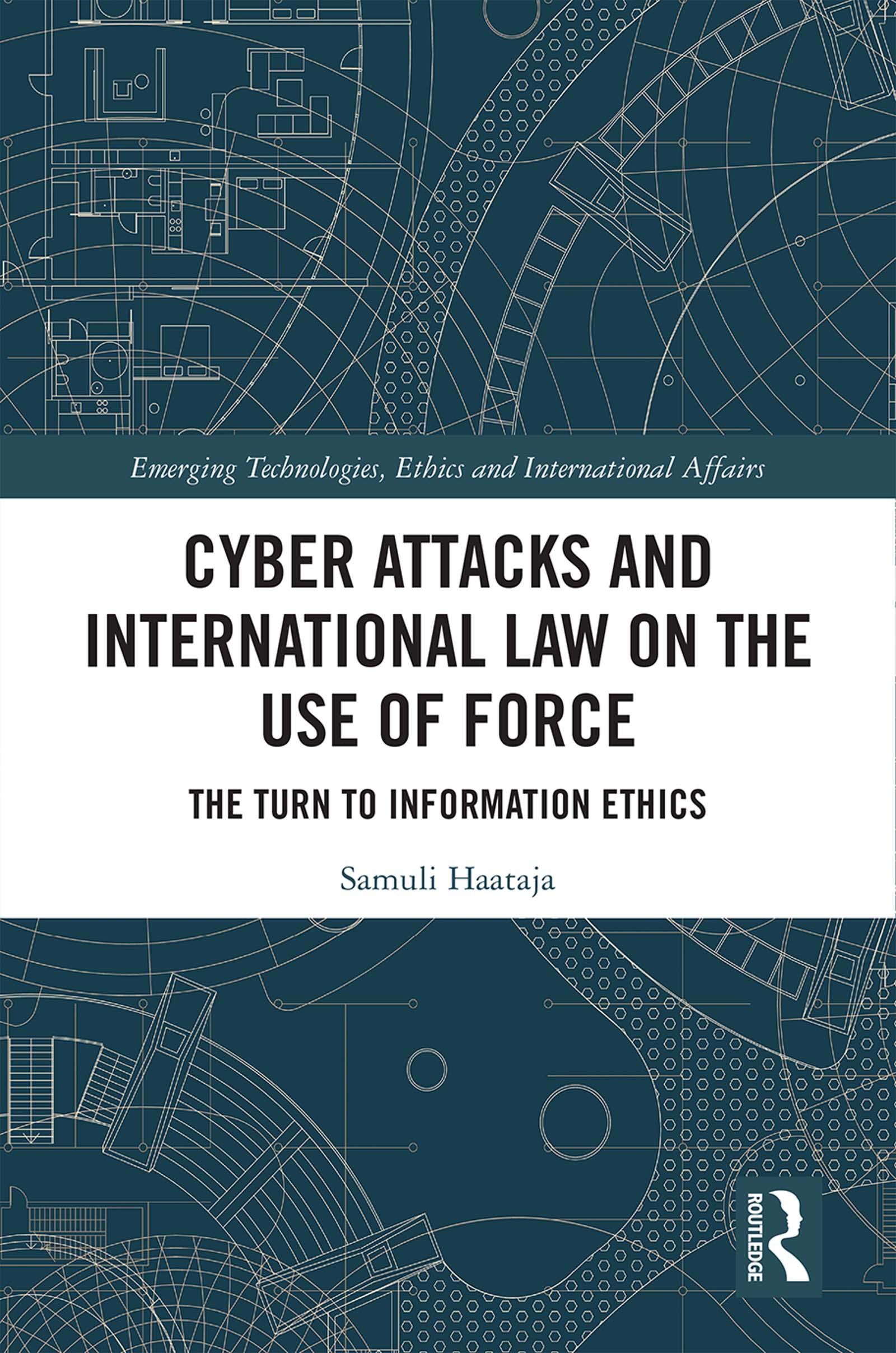
Examining the thematic intersection of law, technology and violence, this book explores cyber attacks against states and current international law on the use of force. The theory of information ethics is used to critique the law’s conception of violence and to develop an informational approach as an alternative way to think about cyber attacks.
Cyber attacks against states constitute a new form of violence in the information age, and international law on the use of force is limited in its capacity to regulate them. This book draws on Luciano Floridi’s theory of information ethics to critique the narrow conception of violence embodied in the law and to develop an alternative way to think about cyber attacks, violence, and the state. The author uses three case studies – the 2007 cyber attacks against Estonia, the Stuxnet incident involving Iran that was discovered in 2010, and the cyber attacks used as part of the Russian interference in the 2016 US presidential election – to demonstrate that an informational approach offers a means to reimagine the state as an entity and cyber attacks as a form of violence against it.
This interdisciplinary approach will appeal to an international audience of scholars in international law, international relations, security studies, cyber security, and anyone interested in the issues surrounding emerging technologies.
Pay easily by card, Klarna, Apple Pay or Google Pay. Not happy? You always have a 14-day money-back guarantee. Read more in our terms. If you have any questions, email us at hello@memmo.org.
Memmo makes studying easier – wherever you are in the world. We bring your course books and smart study tools together in one place: summaries, quizzes, podcasts and flashcards. Plus Ted, your study buddy who answers anything you wonder. Over 50,000 students already study here – built to help you learn faster and stress less.