
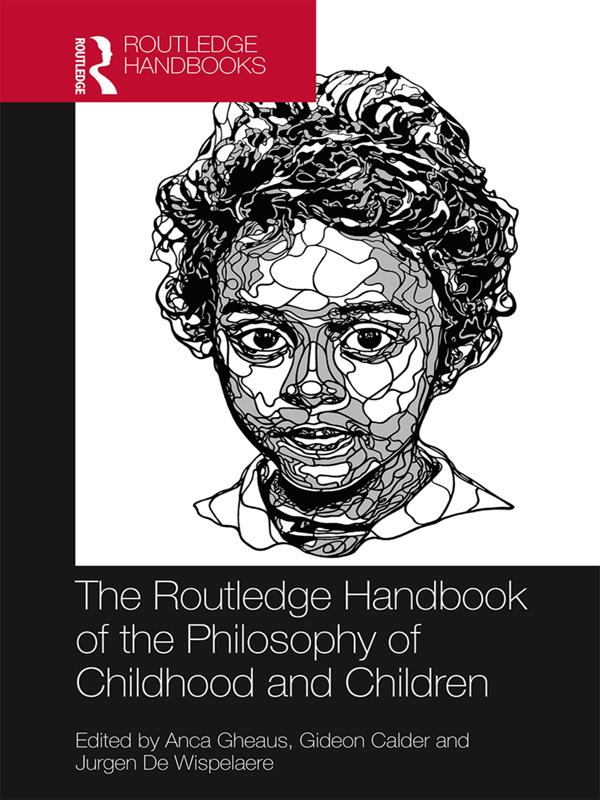
Childhood looms large in our understanding of human life, as a phase through which all adults have passed. Childhood is foundational to the development of selfhood, the formation of interests, values and skills and to the lifespan as a whole. Understanding what it is like to be a child, and what differences childhood makes, are thus essential for any broader understanding of the human condition. The Routledge Handbook of the Philosophy of Childhood and Children is an outstanding reference source for the key topics, problems and debates in this crucial and exciting field and is the first collection of its kind. Comprising over thirty chapters by a team of international contributors the Handbook is divided into five parts:
· Being a child
· Childhood and moral status
· Parents and children
· Children in society
· Children and the state.
Questions covered include: What is a child? Is childhood a uniquely valuable state, and if so why? Can we generalize about the goods of childhood? What rights do children have, and are they different from adults’ rights? What (if anything) gives people a right to parent? What role, if any, ought biology to play in determining who has the right to parent a particular child? What kind of rights can parents legitimately exercise over their children? What roles do relationships with siblings and friends play in the shaping of childhoods? How should we think about sexuality and disability in childhood, and about racialised children? How should society manage the education of children? How are children’s lives affected by being taken into social care?
The Routledge Handbook of the Philosophy of Childhood and Children is essential reading for students and researchers in philosophy of childhood, political philosophy and ethics as well as those in related disciplines such as education, psychology, sociology, social policy, law, social work, youth work, neuroscience and anthropology.
Pay easily by card, Klarna, Apple Pay or Google Pay. Not happy? You always have a 14-day money-back guarantee. Read more in our terms. If you have any questions, email us at hello@memmo.org.
Memmo makes studying easier – wherever you are in the world. We bring your course books and smart study tools together in one place: summaries, quizzes, podcasts and flashcards. Plus Ted, your study buddy who answers anything you wonder. Over 50,000 students already study here – built to help you learn faster and stress less.