
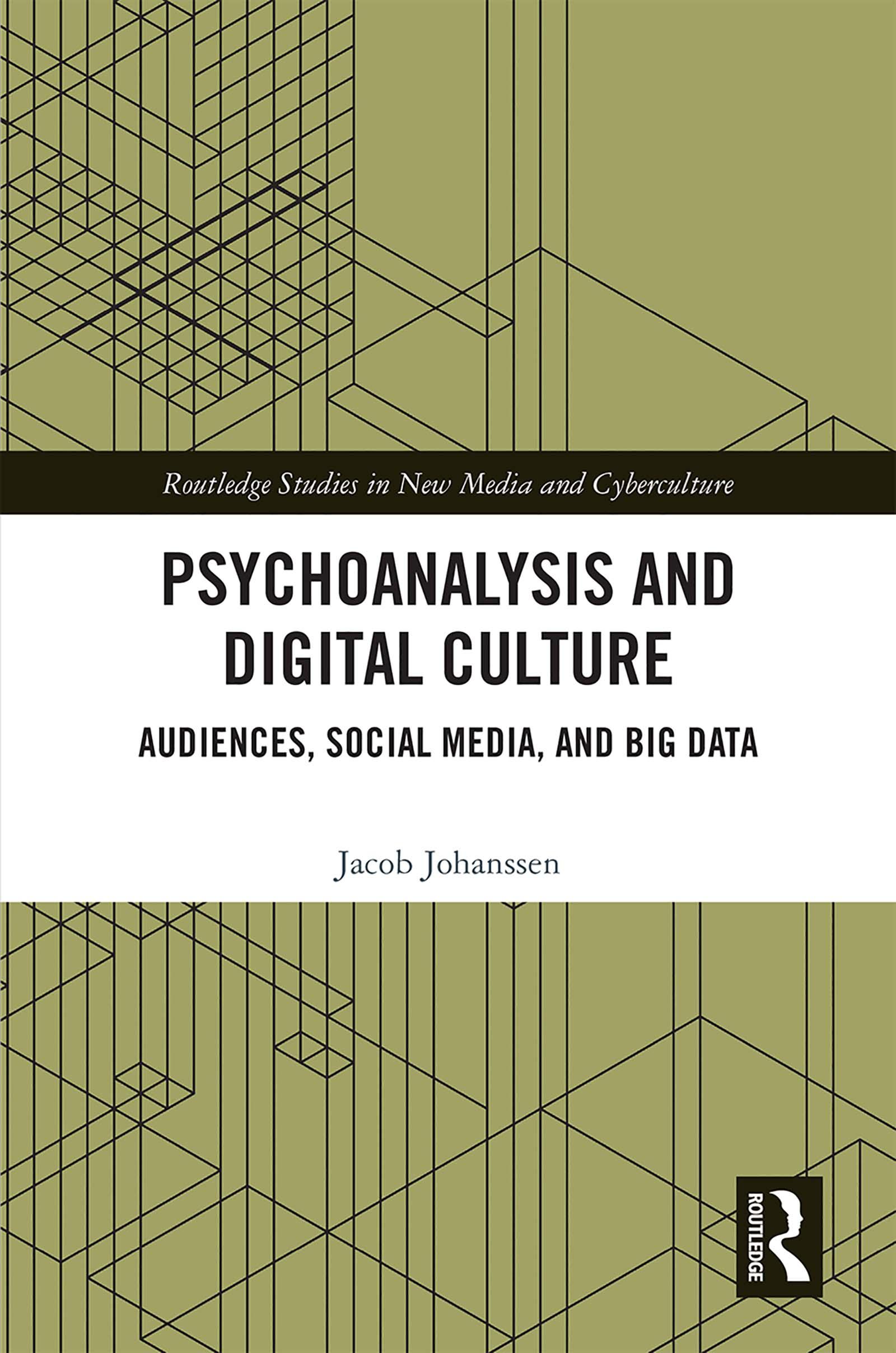
Psychoanalysis and Digital Culture offers a comprehensive account of our contemporary media environment—digital culture and audiences in particular—by drawing on psychoanalysis and media studies frameworks. It provides an introduction to the psychoanalytic affect theories of Sigmund Freud and Didier Anzieu and applies them theoretically and methodologically in a number of case studies. Johanssen argues that digital media fundamentally shape our subjectivities on affective and unconscious levels, and he critically analyses phenomena such as television viewing, Twitter use, affective labour on social media, and data-mining.
How does watching television involve the body? Why are we so drawn to reality television?
Why do we share certain things on social media and not others? How are bodies represented on social media?
How do big data and data mining influence our identities? Can algorithms help us make better decisions?
These questions amongst others are addressed in the chapters of this wide-ranging book. Johanssen shows in a number of case studies how a psychoanalytic angle can bring new insights to audience studies and digital media research more generally. From audience research with viewers of the reality television show Embarrassing Bodies and how they unconsciously used it to work through feelings about their own bodies, to a critical engagement with Hardt and Negri's notion of affective labour and how individuals with bodily differences used social media for their own affective-digital labour, the book suggests that an understanding of affect based on Freud and Anzieu is helpful when thinking about media use. The monograph also discusses the perverse implications of algorithms, big data and data mining for subjectivities. In drawing on empirical data and examples throughout, Johanssen presents a compelling analysis of our contemporary media environment.
Pay easily by card, Klarna, Apple Pay or Google Pay. Not happy? You always have a 14-day money-back guarantee. Read more in our terms. If you have any questions, email us at hello@memmo.org.
Memmo makes studying easier – wherever you are in the world. We bring your course books and smart study tools together in one place: summaries, quizzes, podcasts and flashcards. Plus Ted, your study buddy who answers anything you wonder. Over 50,000 students already study here – built to help you learn faster and stress less.